Romania, Cut a Little Short
Romania was meant to be a much bigger trip. Then I picked up a leg injury during the Bucharest stay, and the plan quietly shrank into something more compact. What I came away with is a tight loop through the south and west: a quick taste of the capital, one famous castle, a couple of gorgeous old towns, one absurd mountain road, a few too-relaxed roadside bears, and Timișoara glowing under cartoon-blue skies.
So this isn't the full country. It's the slice I actually got, and even that was enough to tell me Romania's worth coming back for. The shape of it is a loop you can drive in under a week: Bucharest first, then northwest into Transylvania for the old towns, up and over the Transfăgărășan, down past the bears and Vidraru Dam, and a long westward run to finish in Timișoara. Nothing about it needs to be rushed, and the mountain day especially wants room to breathe.


Destination Info
Quick Facts
Overview
- Best 5 to 10 days in May till September.
- At 430m in Southeastern Europe, time zone UTC+2 (UTC+3 DST).
- The population of 19M people speaks Romanian, writes in Latin script.
- Romanian Leu (RON) is the official currency, and tipping is 10%.
Local Flavor
- Get a Țuică and Sarmale.
- The main festival here is Dragobete, and popular sports include Football.
Practicalities
- You can use Trains, buses, Bucharest metro, rental car for public transportation, while driving on the right.
- You can get here mostly via Bucharest (OTP).
Bucharest: Heavy, Loud, Unfinished
Bucharest got the longest stay and, thanks to the bad leg, the shallowest visit. I really only got to three things properly: the Palace of the Parliament, the Romanian Athenaeum, and the Unirii fountains. That's nowhere near enough to judge a capital this size, so I won't pretend it is. But what I saw was enough to make me want to come back and do it right.
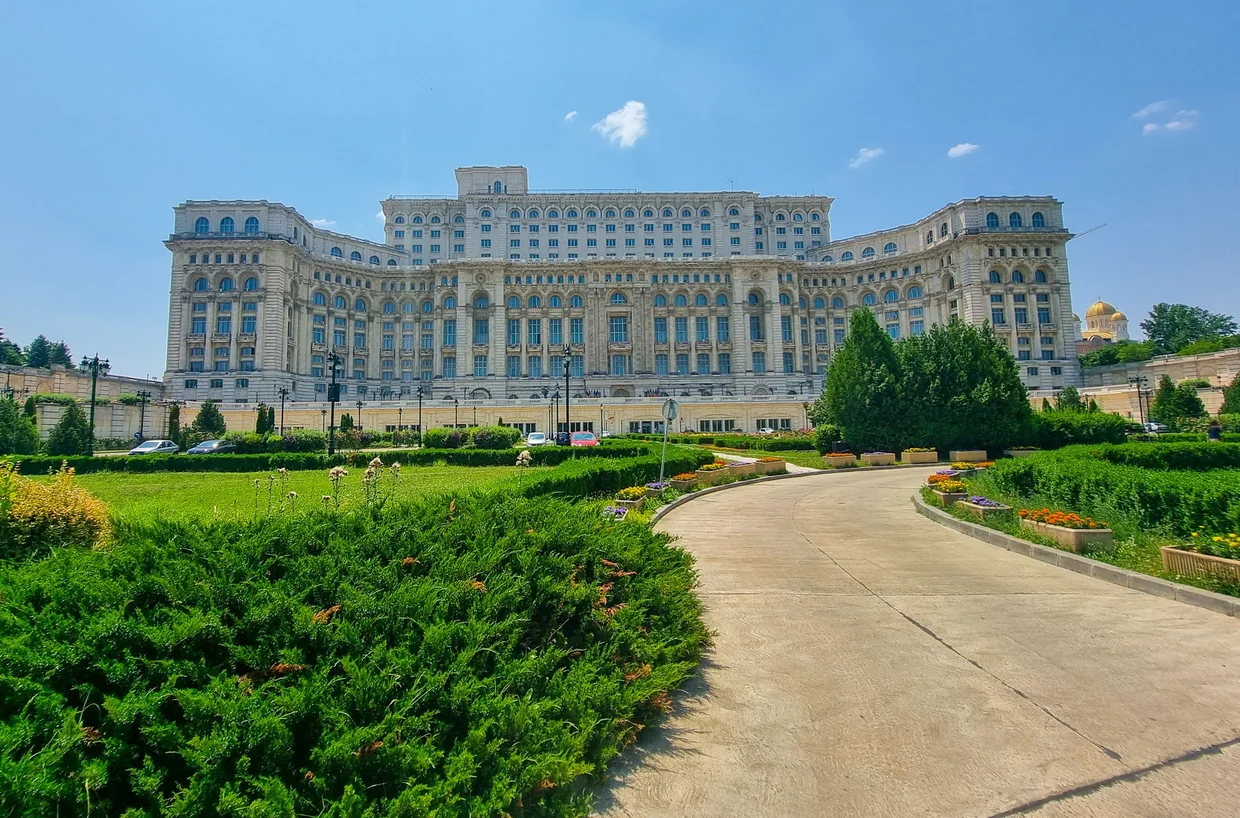
The Palace of the Parliament doesn't exactly whisper. It's the heaviest building on Earth, and it feels like it. Not big in a "handsome civic building" way, big in a "they bulldozed a whole neighborhood for this" way, which is exactly what happened. Even from the gardens outside, it swallows the whole frame. You can only go inside on a guided tour, and there was a big group waiting for the next slot when I passed, so it's clearly a popular one. Book ahead and bring ID.
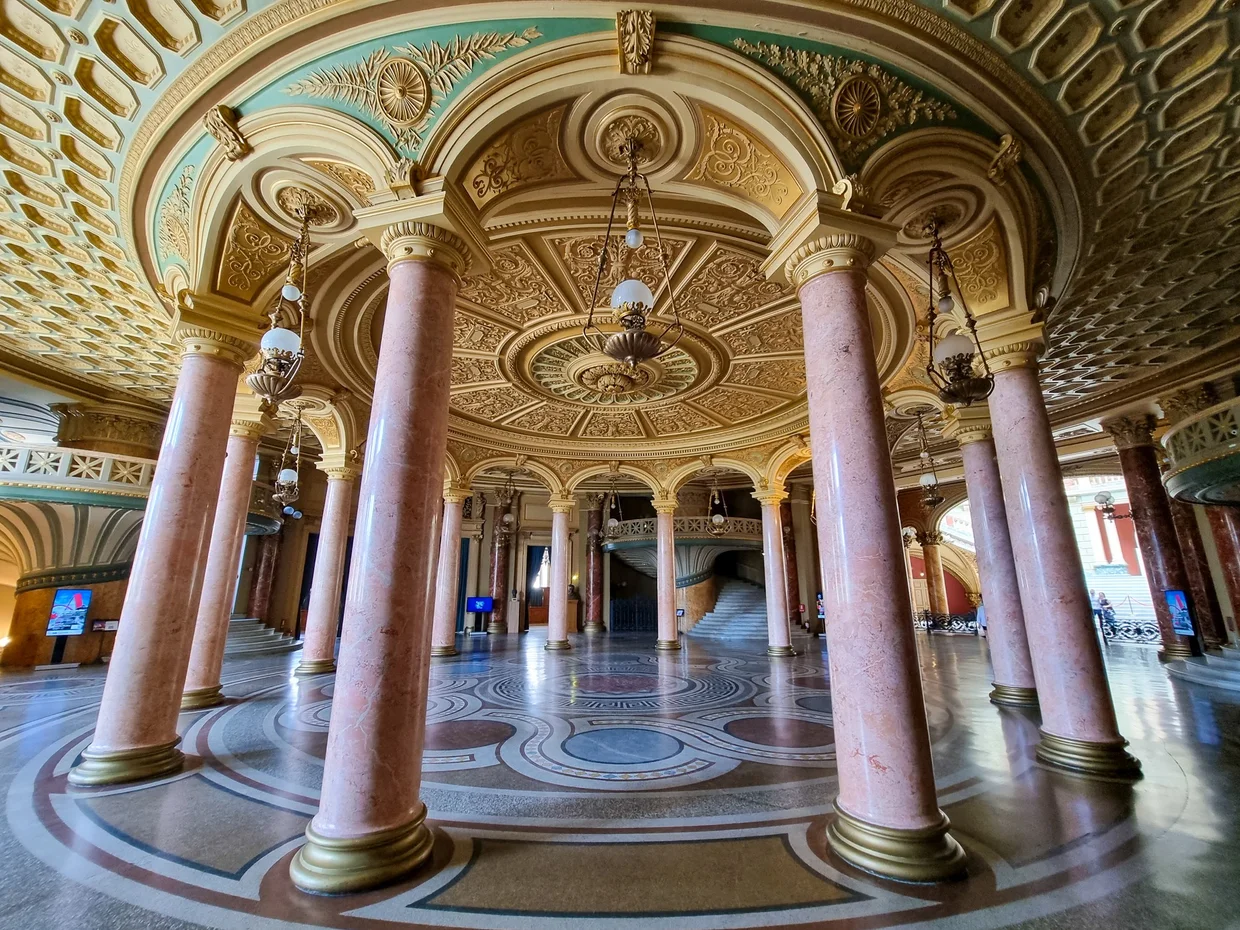
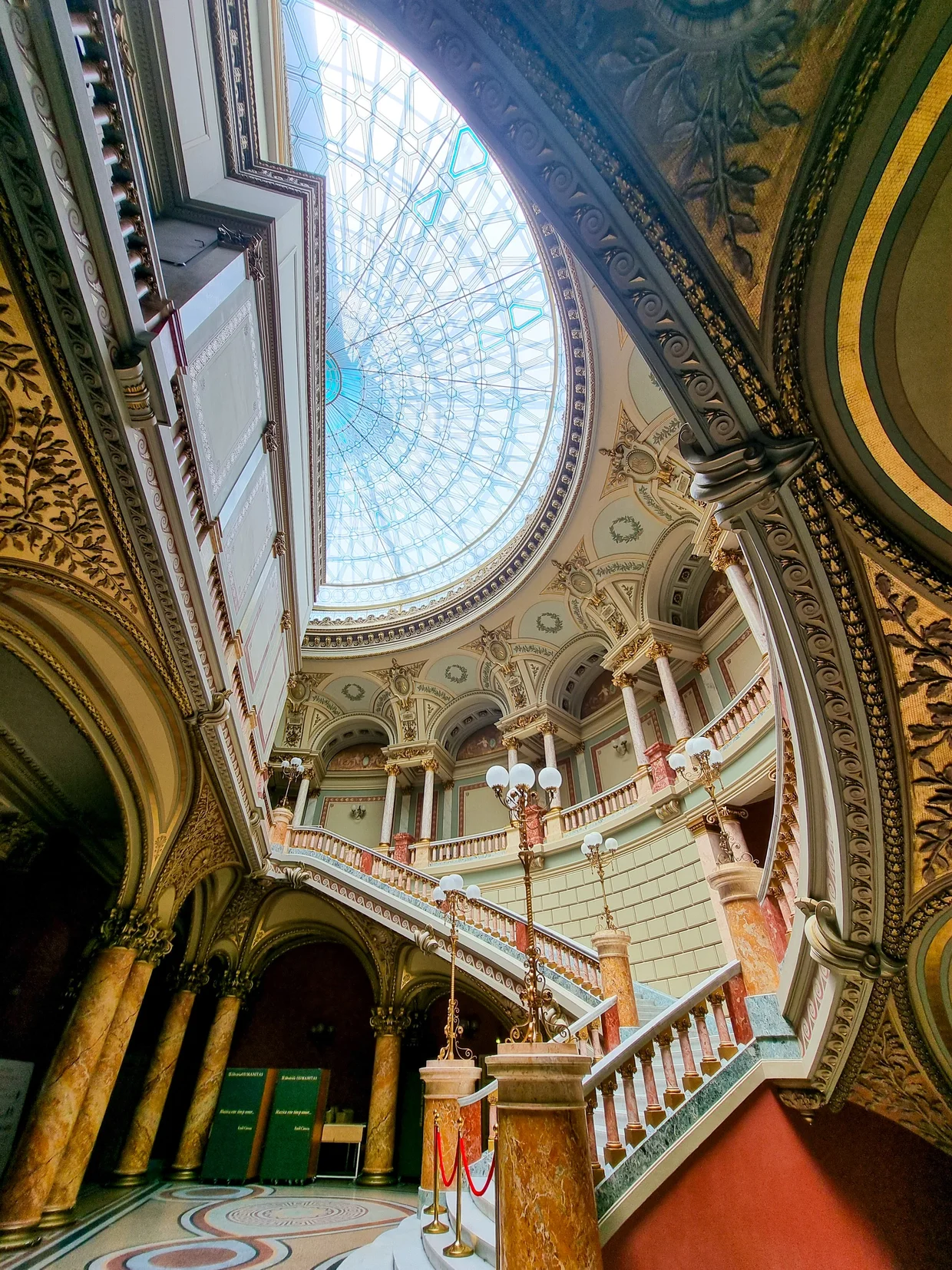
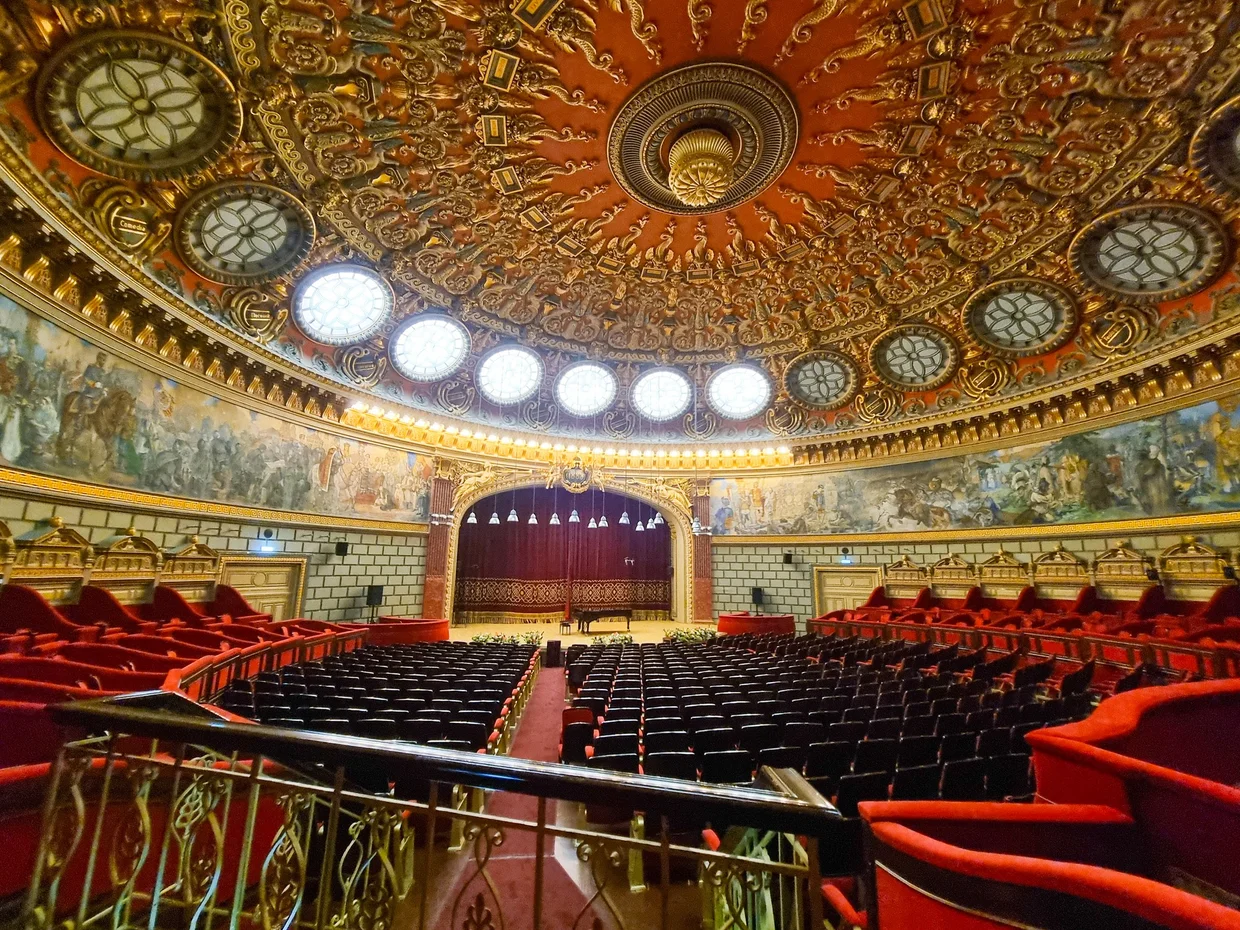
The Romanian Athenaeum was the highlight. It's the city's grand concert hall, and the inside is all marble columns, gilding, and a circular auditorium under a painted dome, lit in that warm theatre way that makes you stand a little straighter without meaning to. If most of my Bucharest was painkillers and grey moods, this was the moment the city got to show off, and it earned it.
It also barely seems to be on anyone's list, which is a shame. I went early afternoon and there were maybe ten other people in the whole building. I had the concert hall itself to myself for a good fifteen minutes. For a space this beautiful, that kind of quiet is rare, and it makes the Athenaeum an easy one to recommend.
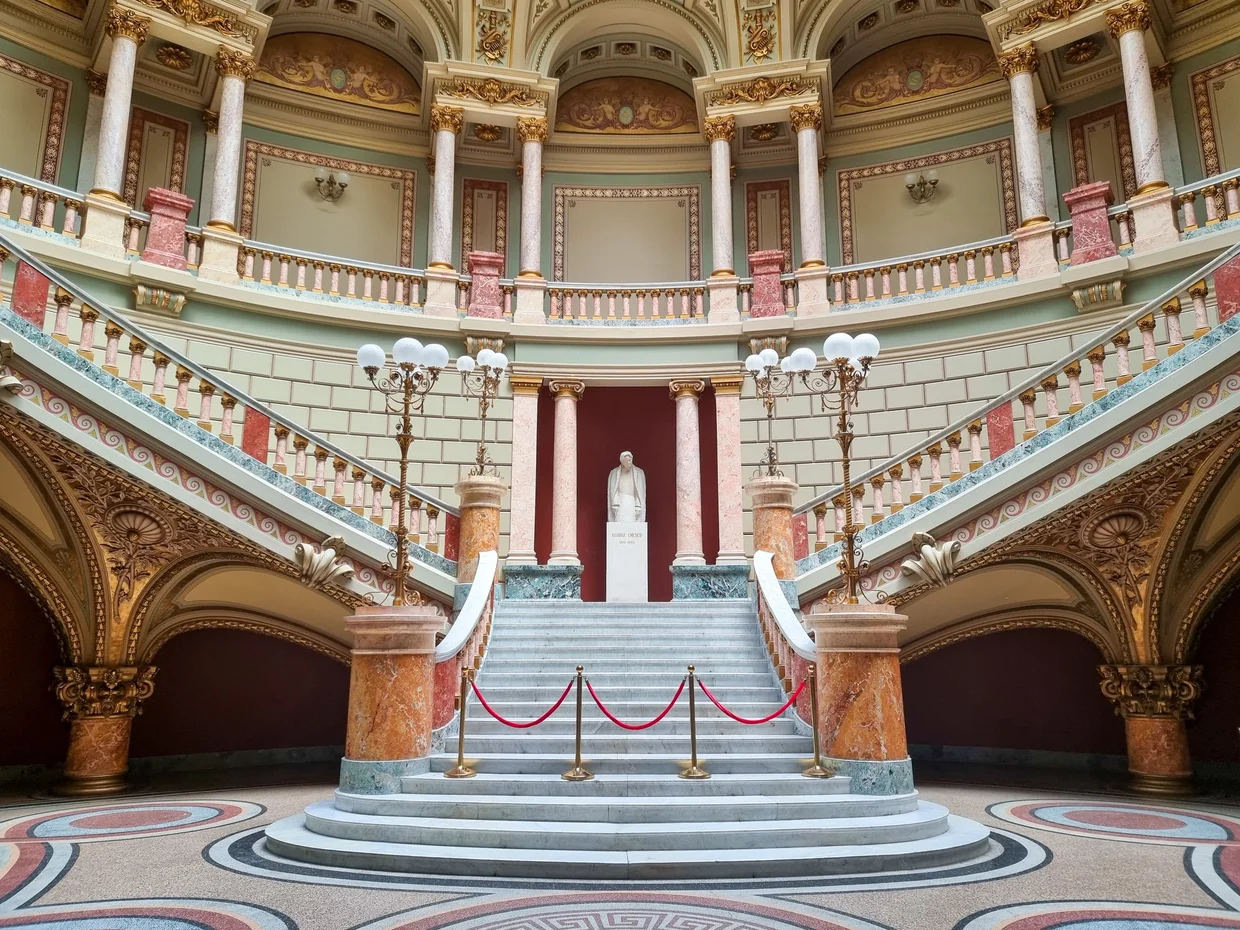
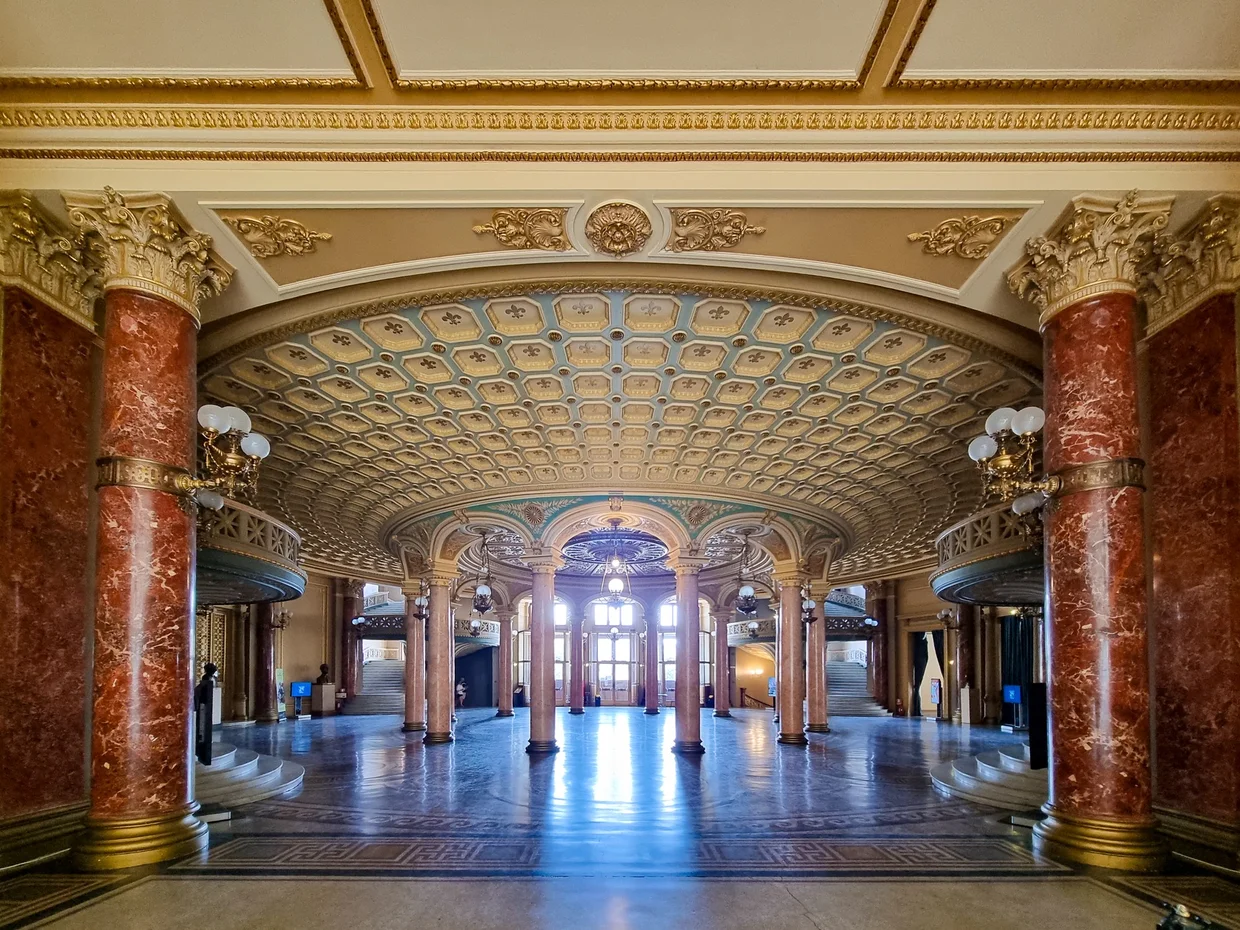
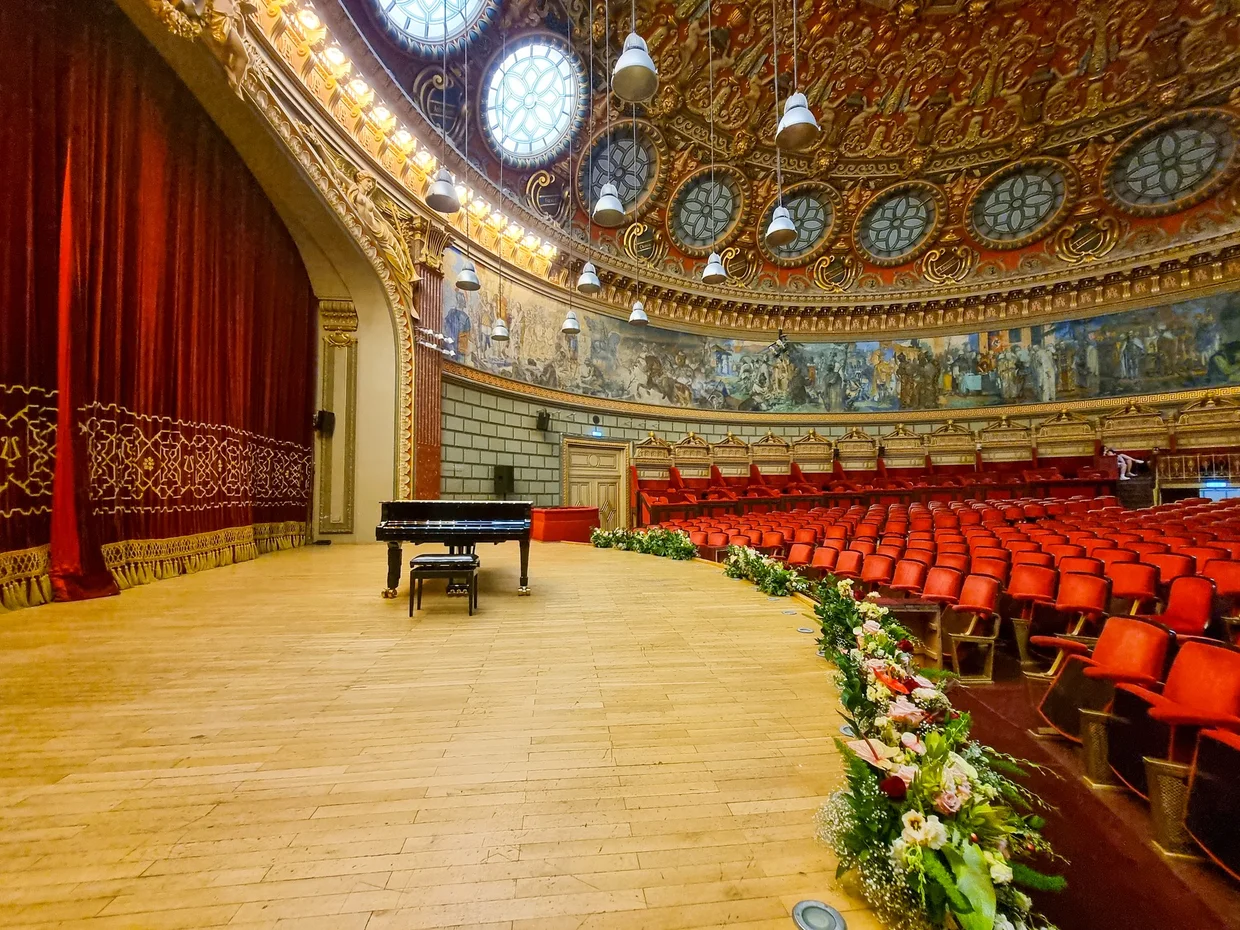
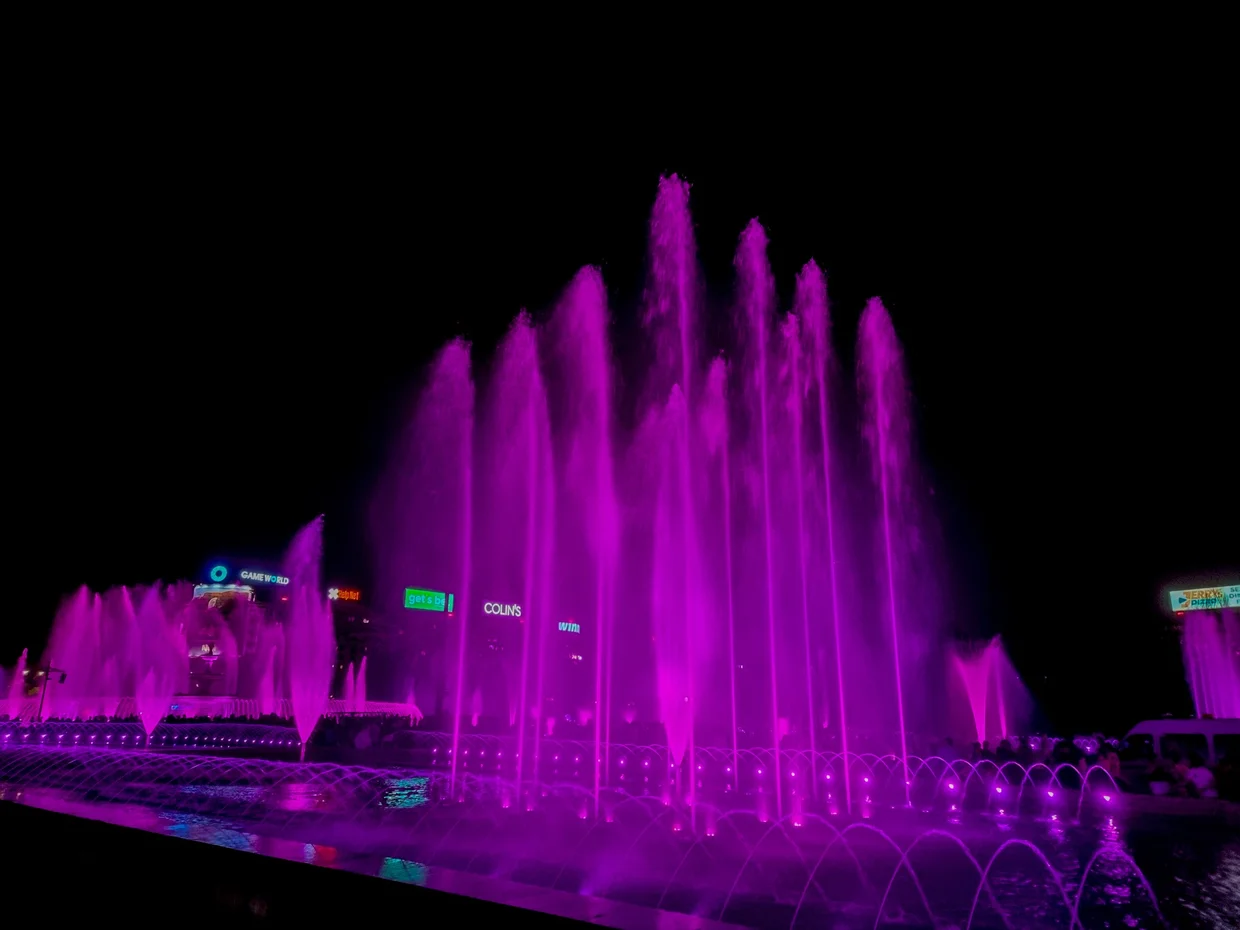
The Unirii fountains are the easy evening win. After dark the water glows and runs through its light show, and the long line of basins down the boulevard fills up fast. It gets crowded, with everyone jockeying for a better spot to sit, so don't expect a quiet, intimate moment. You can still move around and take it all in, but it's a busy, buzzy scene rather than a calm one. Bucharest obviously has far more than the three stops I managed, so take this as a teaser, not a verdict.
Bran Castle: Famous, Crowded, a Little Underwhelming
Bran is the castle everyone means when they say "Dracula's castle," even though Bram Stoker never came here and Vlad the Impaler's link to it is thin at best. It does look the part: red roofs and a white tower stacked on a rock, forested hills behind, and the kind of moody clouds that turn up right on cue.
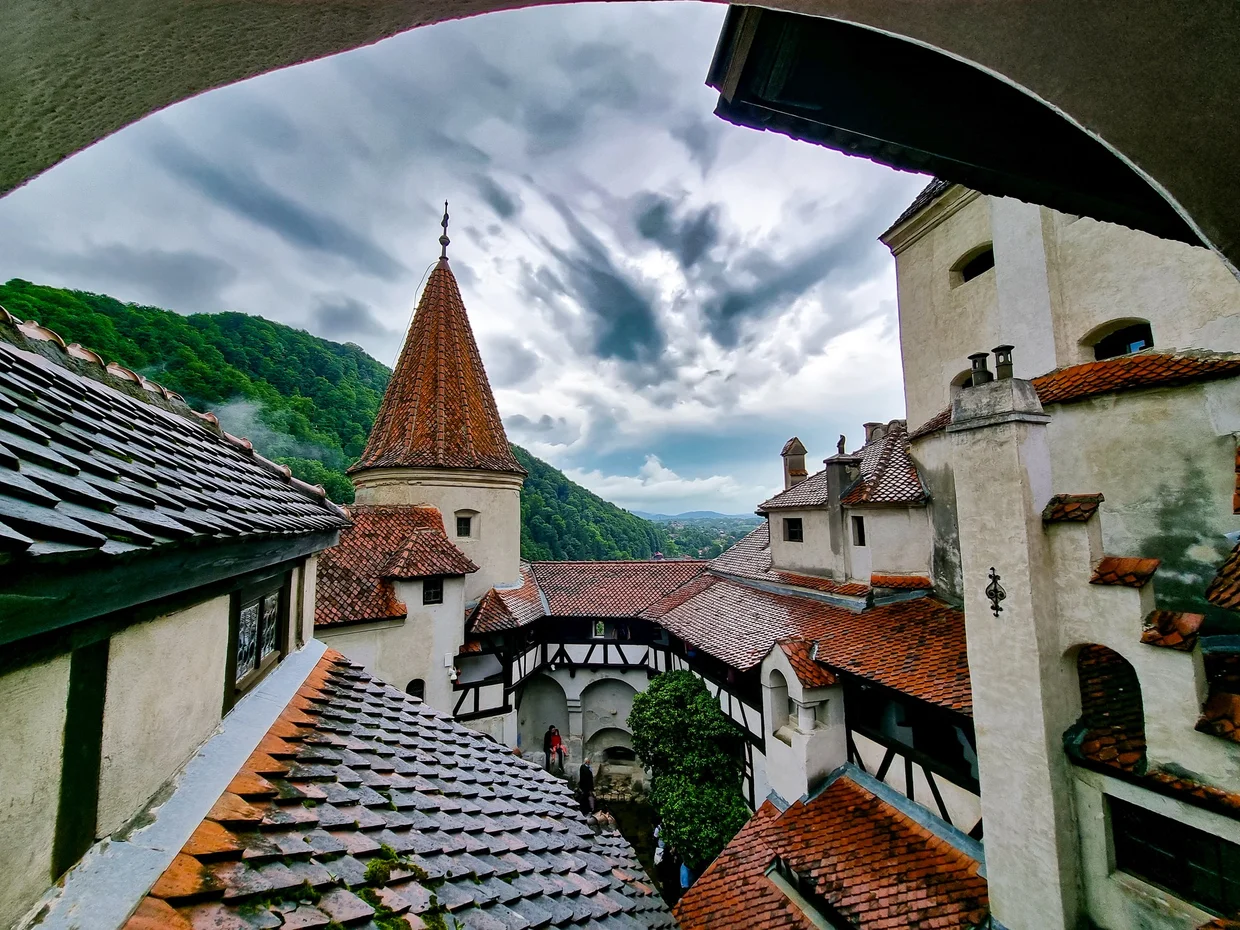
The visit itself underwhelmed me. It's not a scam and it's not a bad castle, but I've never seen so many people crammed into one. The inside is a slow shuffle through narrow rooms and stairways, and most of the time you're staring at the back of someone's head instead of the castle.
There's real charm under all that, but the Dracula marketing has turned it into a squeeze. I wouldn't drive out of my way for it, and there are far better castles in Europe, almost certainly elsewhere in Romania too. If Bran already sits on your route, go early, before the tour buses land. It needs breathing room more than it needs one more visitor wedged onto a staircase.
Sighișoara: The Easiest Place to Love
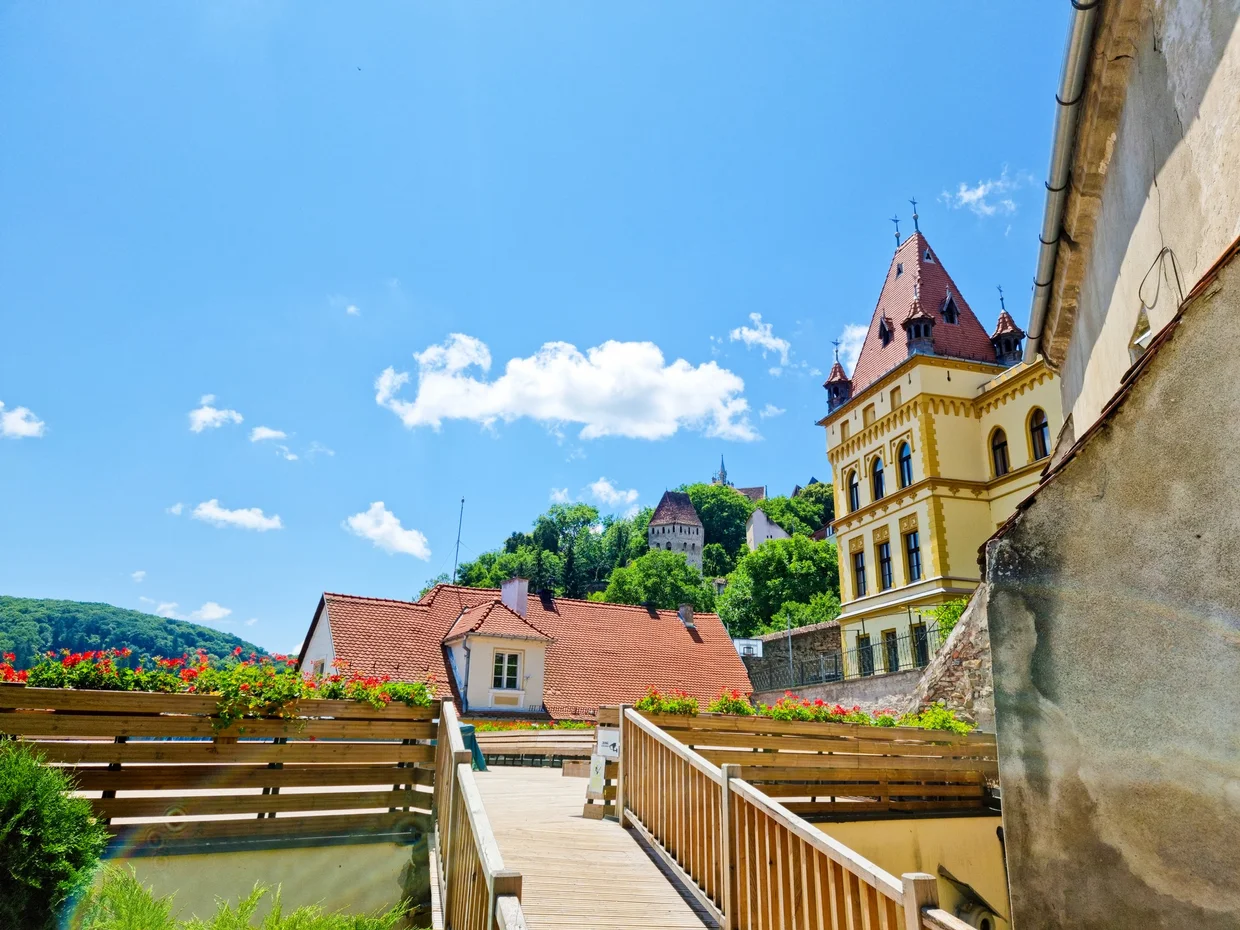
Sighișoara is the kind of town that makes everywhere else look like it isn't trying. The citadel is a still-inhabited medieval hill town and a UNESCO World Heritage site, with steep cobbled lanes, pastel houses, and orange roofs spilling down toward green hills. It's also the birthplace of Vlad the Impaler, the real figure behind the Dracula legend that Bran trades on, so the actual Dracula connection sits here, not at the famous castle.
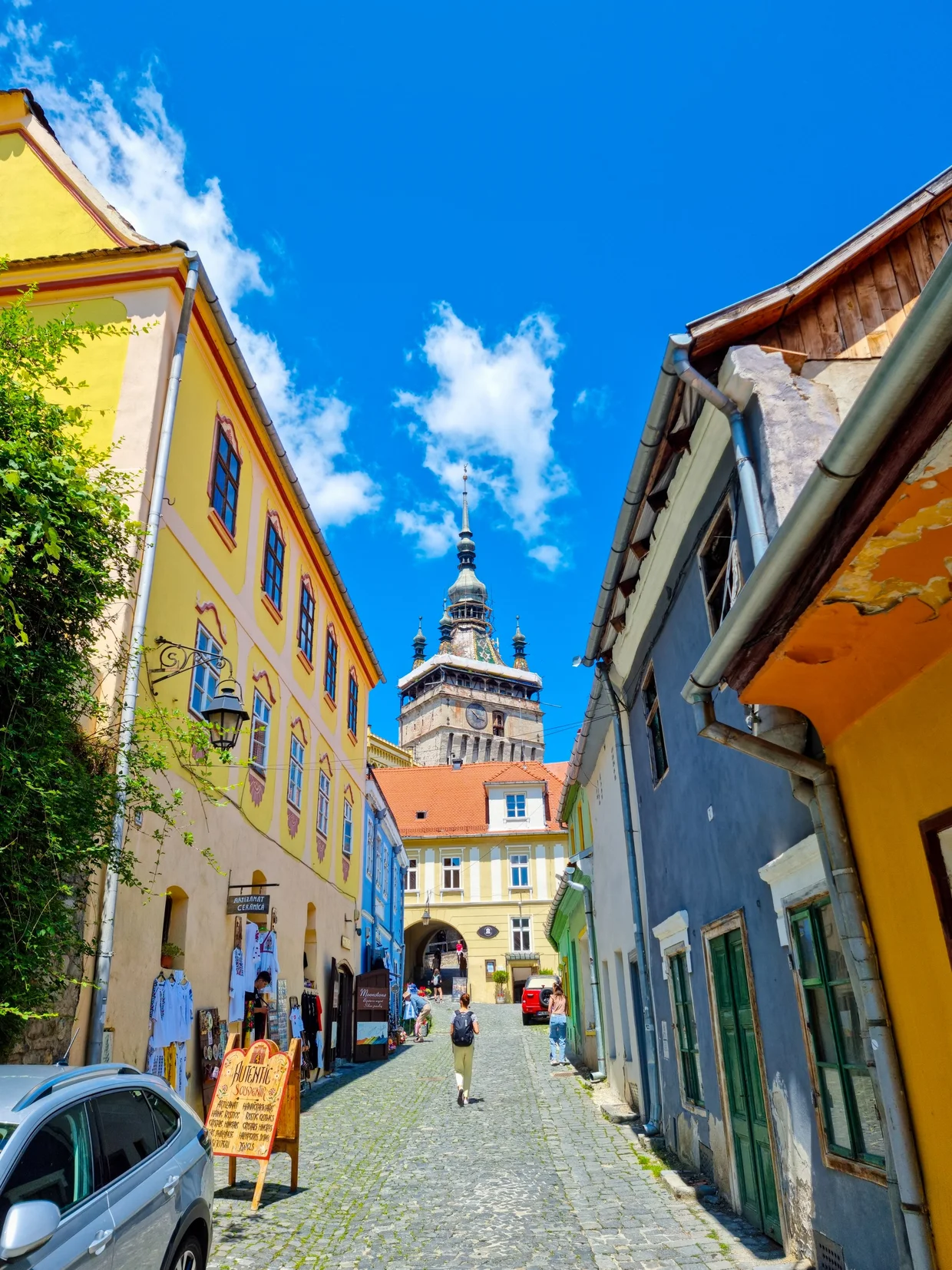
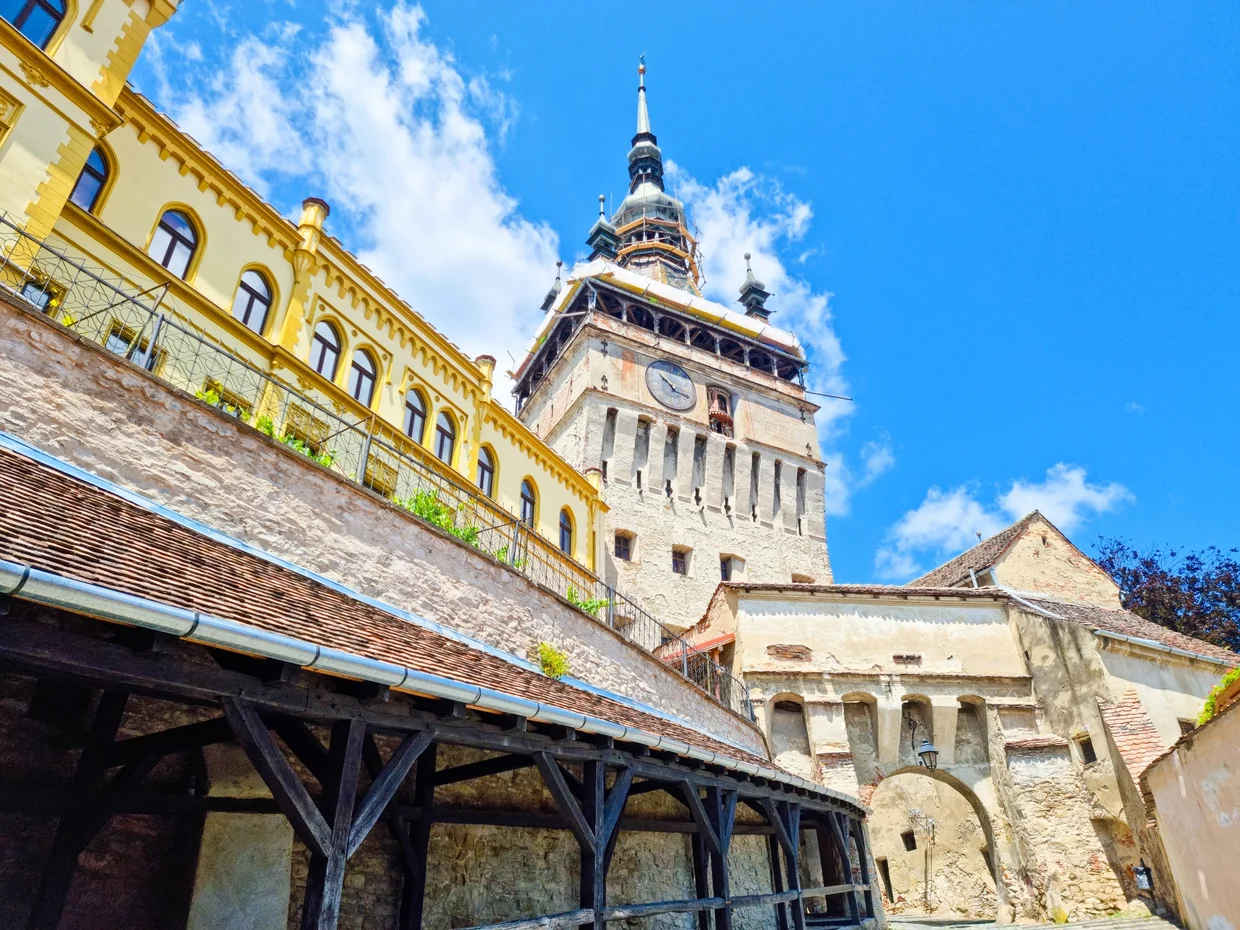
The Clock Tower anchors everything and keeps reappearing between the lanes from almost every angle. Around it you get courtyards, painted facades, and viewpoints that look out over the rooftops to the countryside beyond.
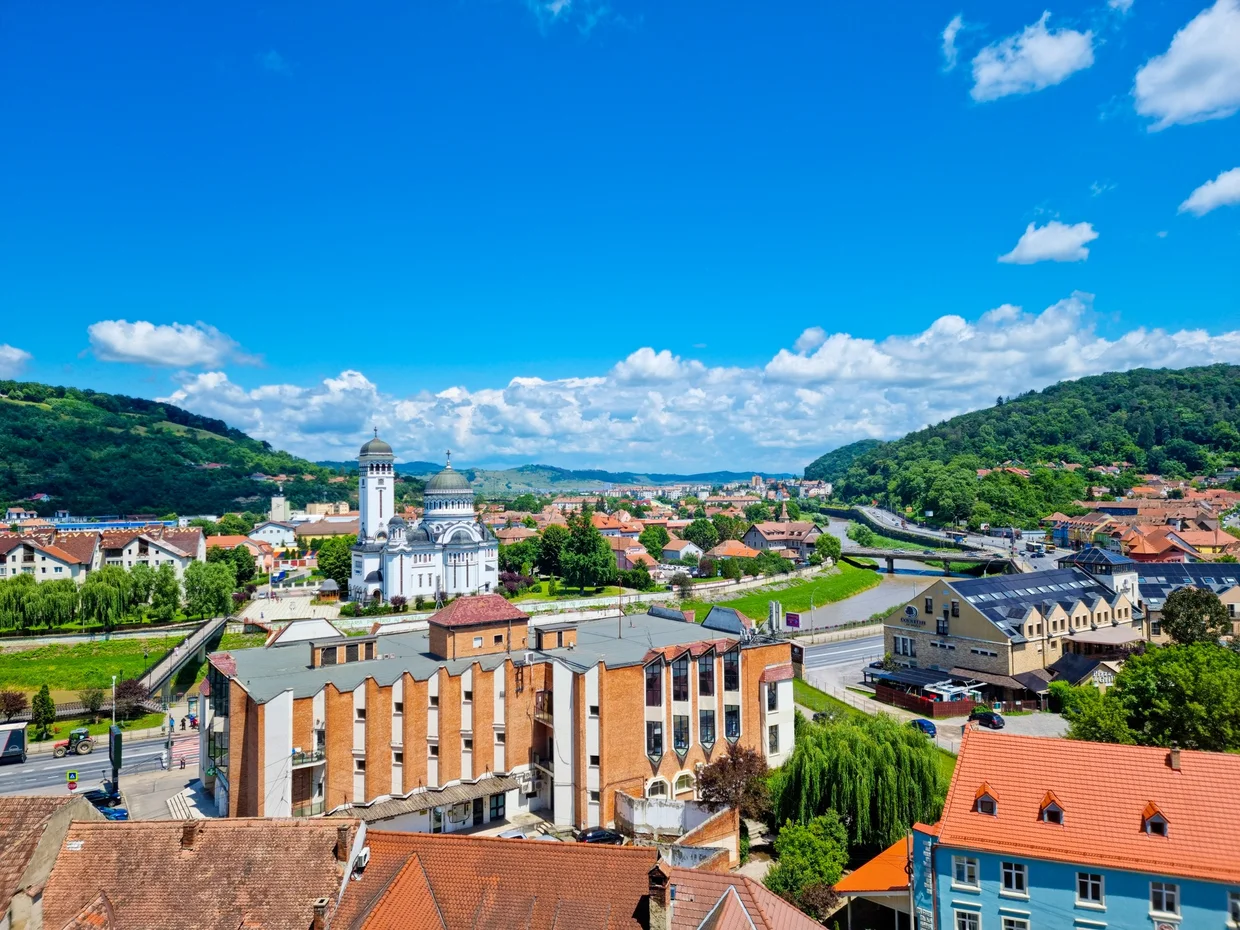
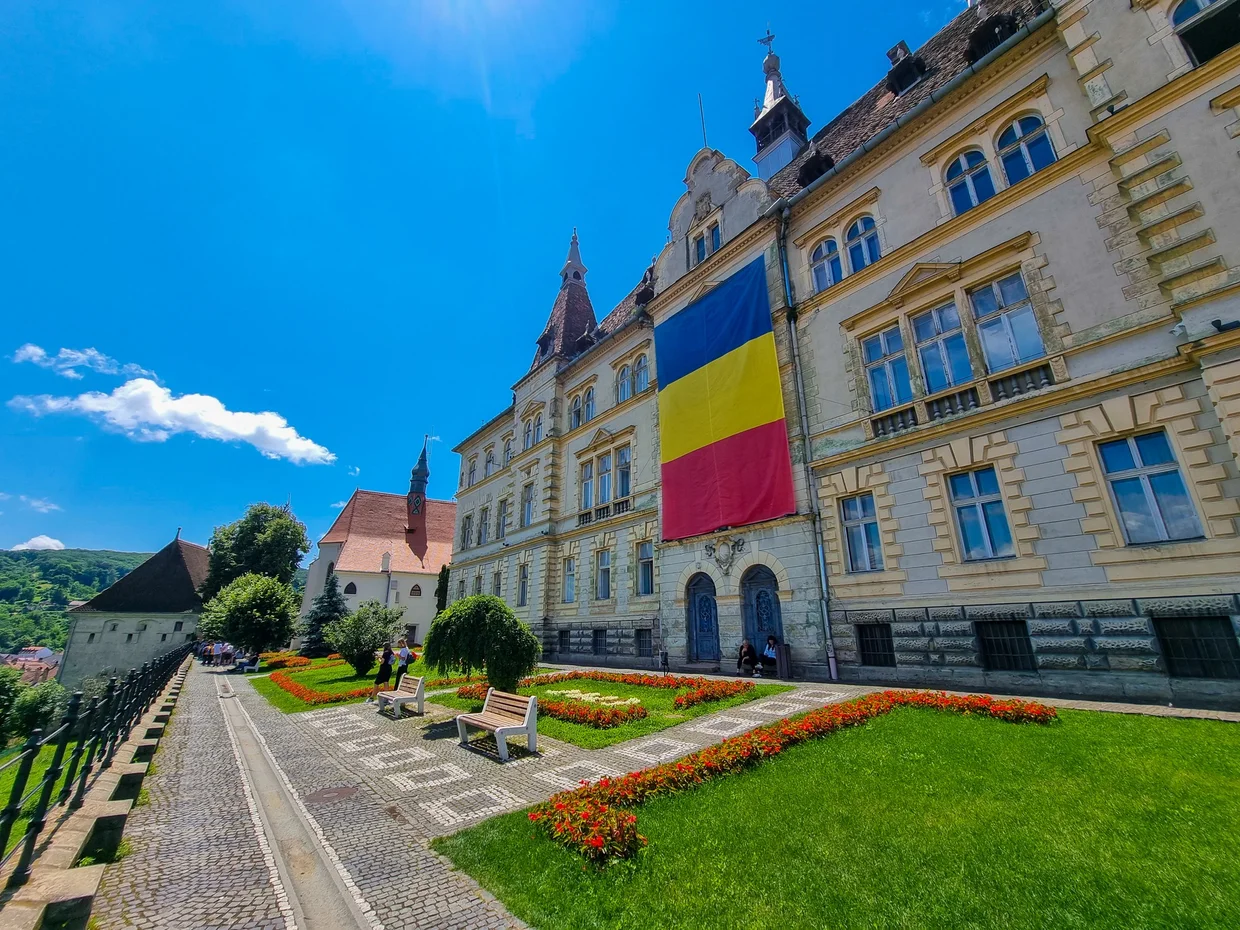
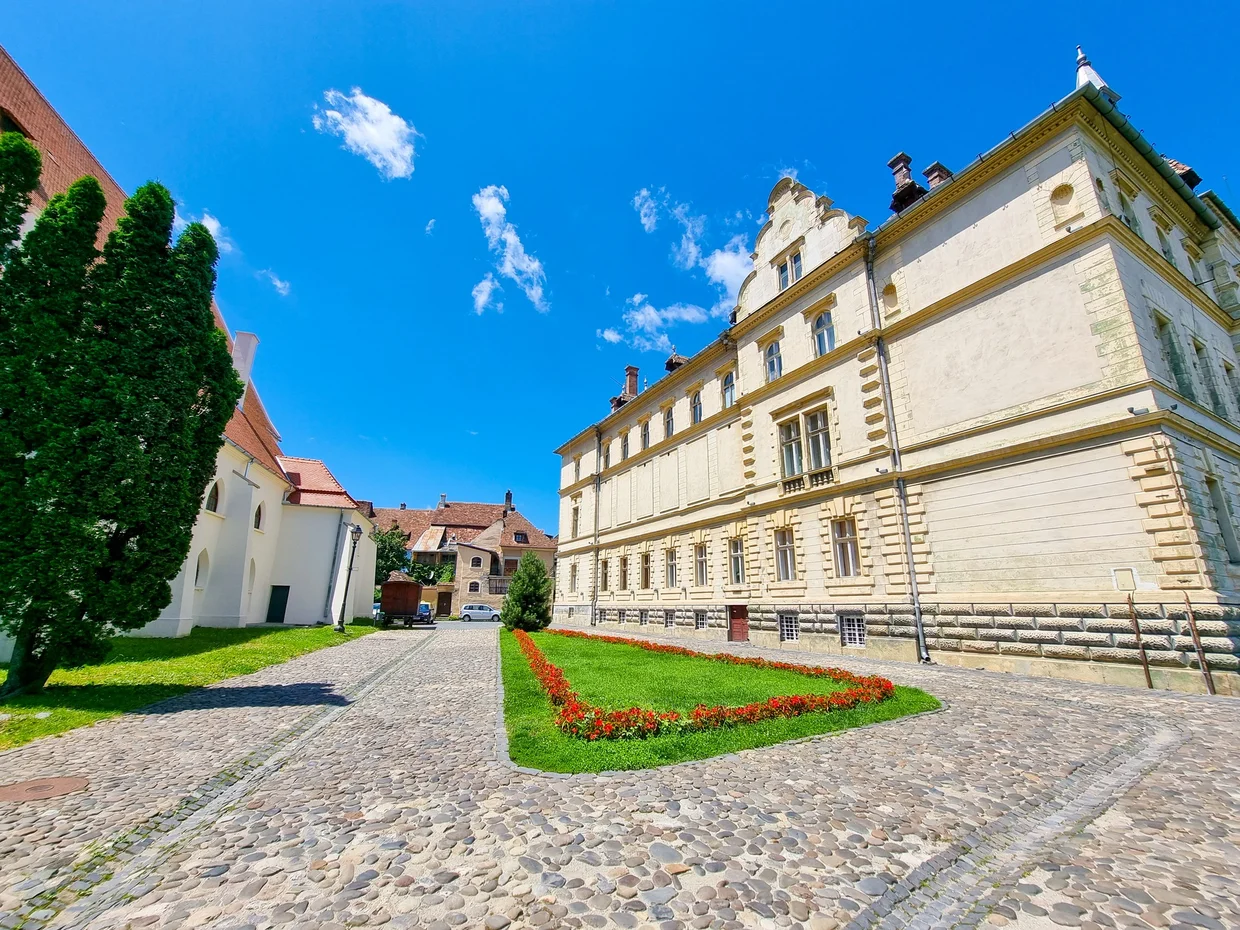
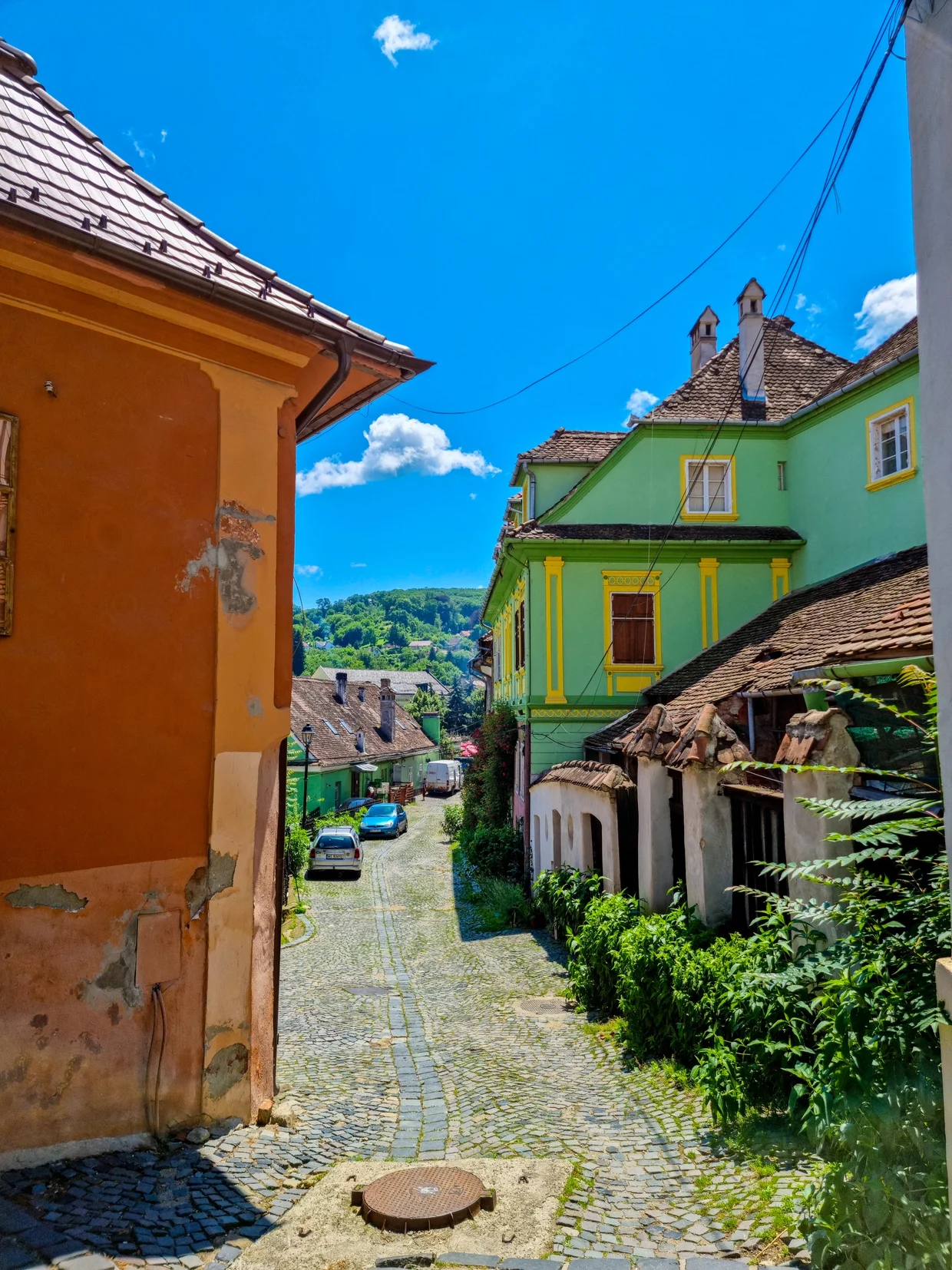
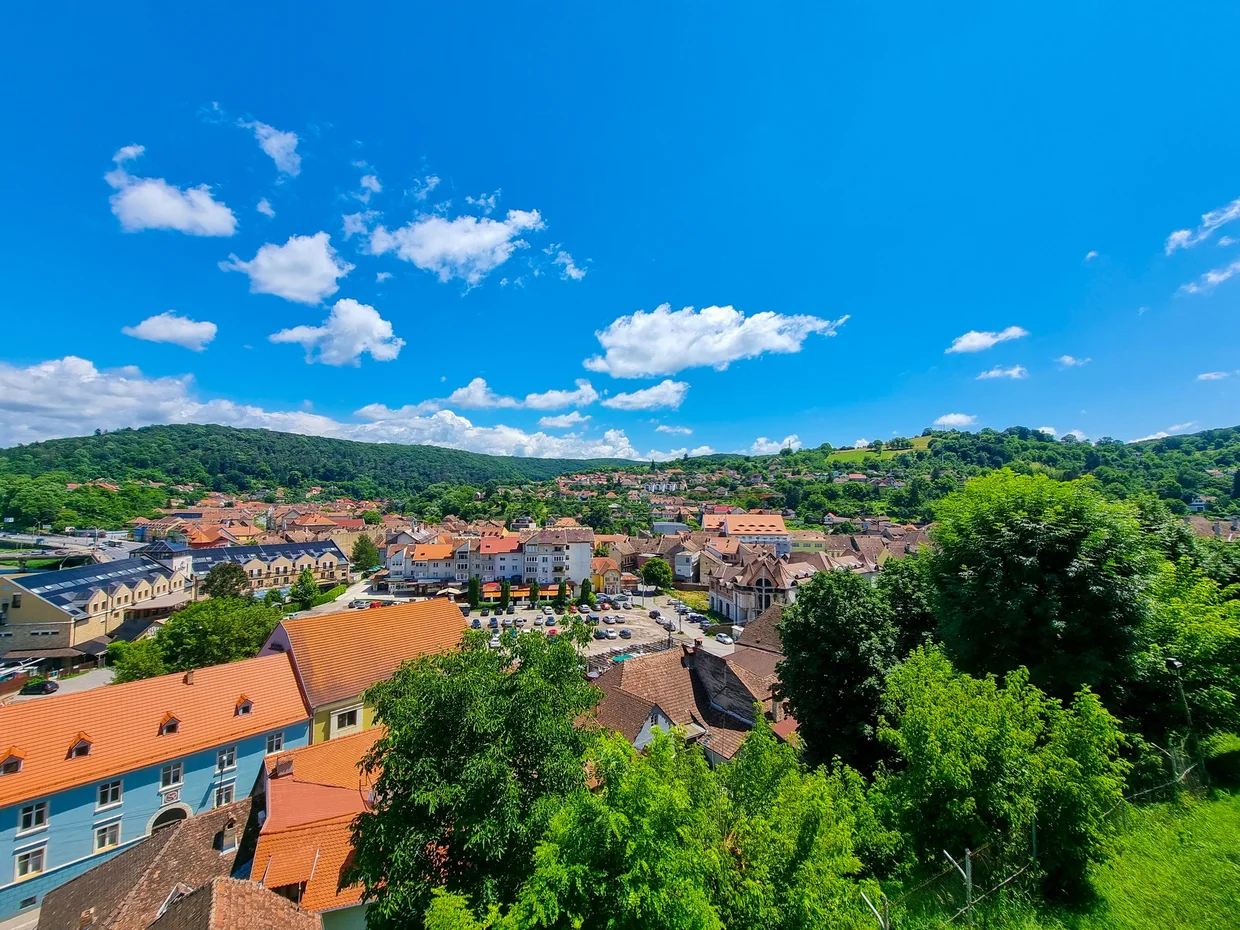
This was the easiest place to love on the whole trip, no real pitch needed. It works as a half-day wander if you're passing through, but staying overnight buys you the quiet lanes after the day-trippers leave, which is when it's at its best. You walk, you look up, and you just go with it.
Sibiu: A Good Base Before the Mountains
Sibiu is where I based myself for two nights before the mountain day, and it left a good impression. The old town spreads across two big linked squares, with pastel facades, baroque towers, and the famous "eyes of Sibiu," the half-lidded roof windows that seem to watch you cross the square. It's a Saxon town at heart, one of the old Transylvanian seven, and it wears that history comfortably.
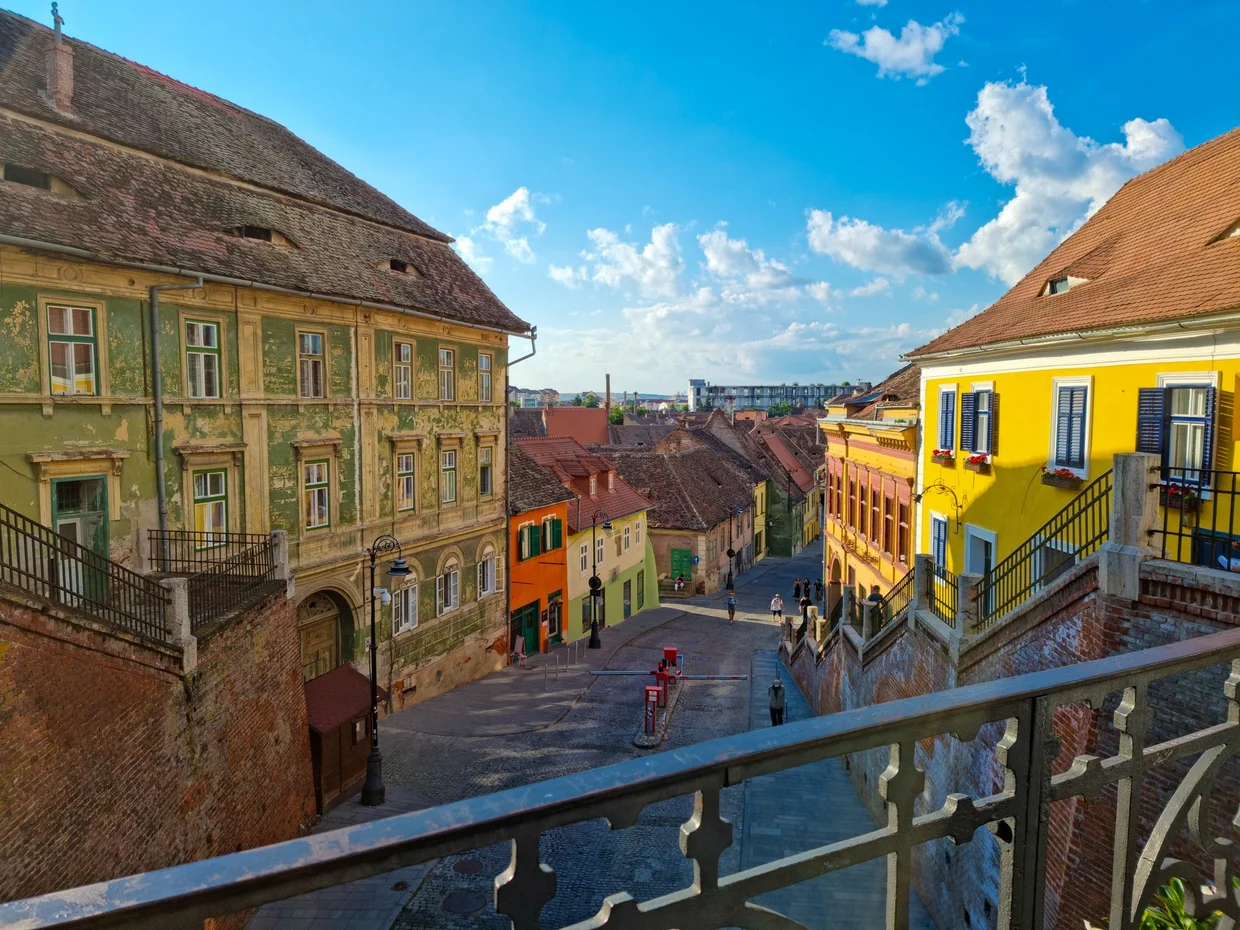
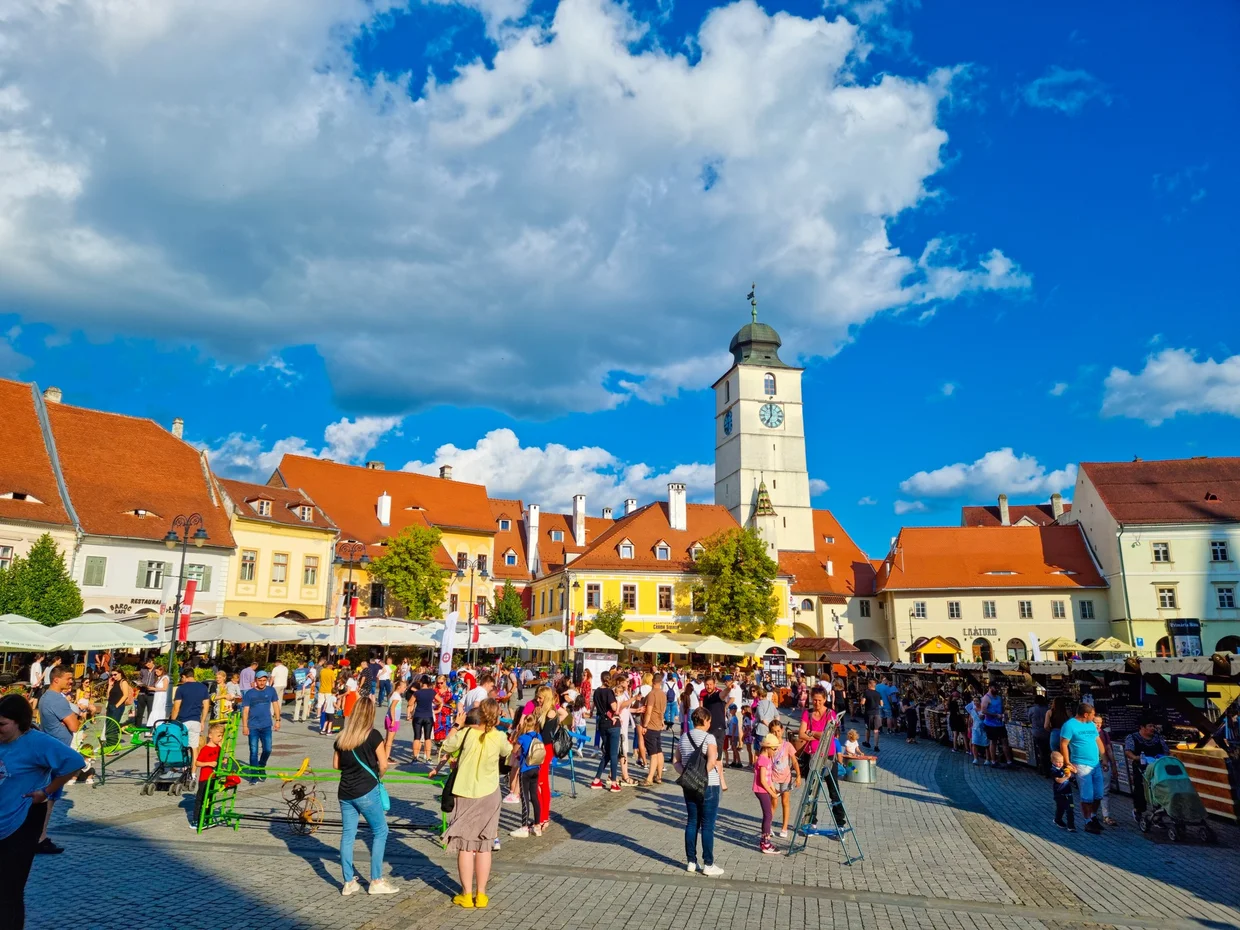
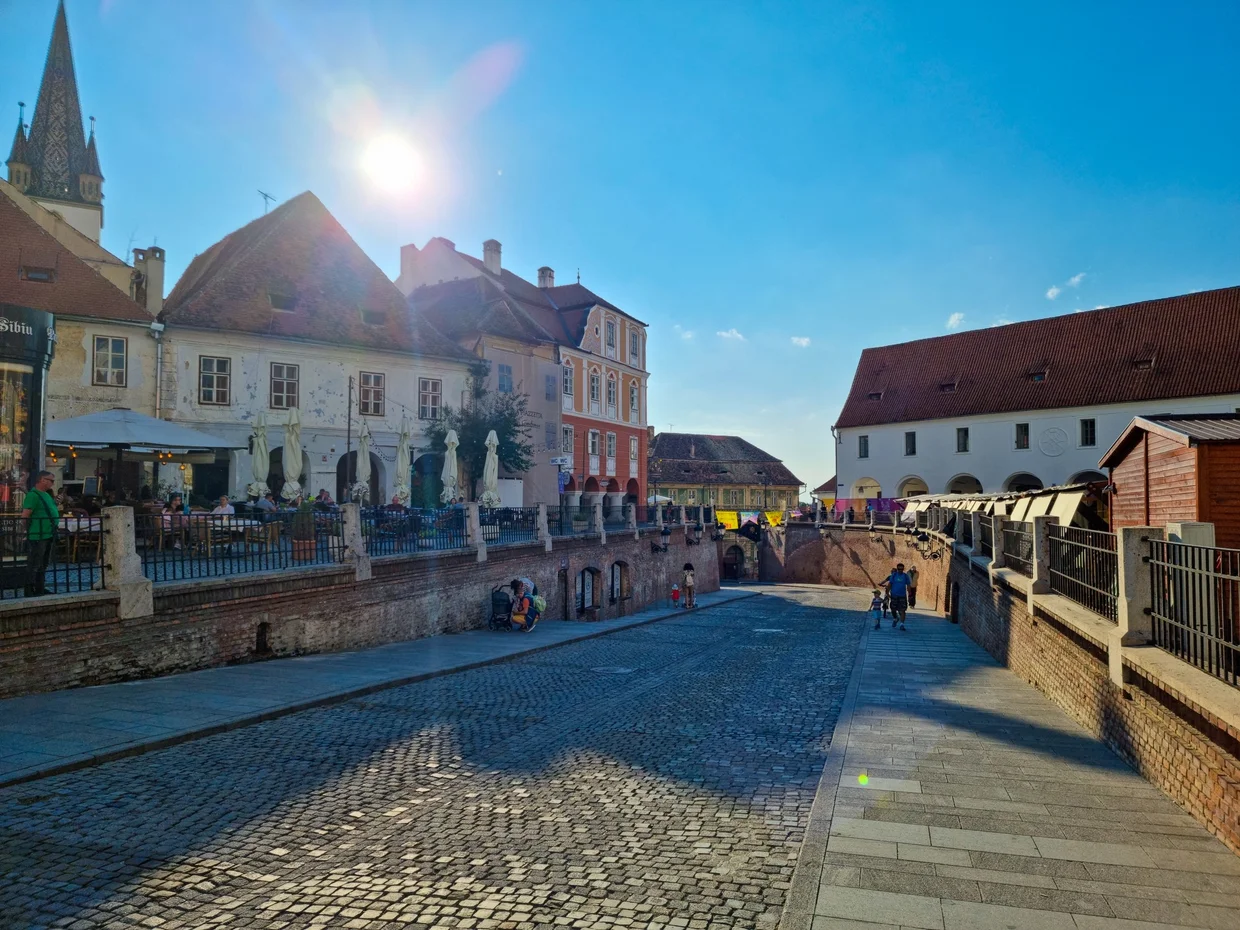
Two nights turned out to be a comfortable amount of time. It gave the old town room to breathe in the evenings once the day crowds thinned, and left the car nearby and rested for the early start up the Transfăgărășan. As a place to settle before the mountains, Sibiu does the job nicely.
The Transfăgărășan: A Road Worth Driving
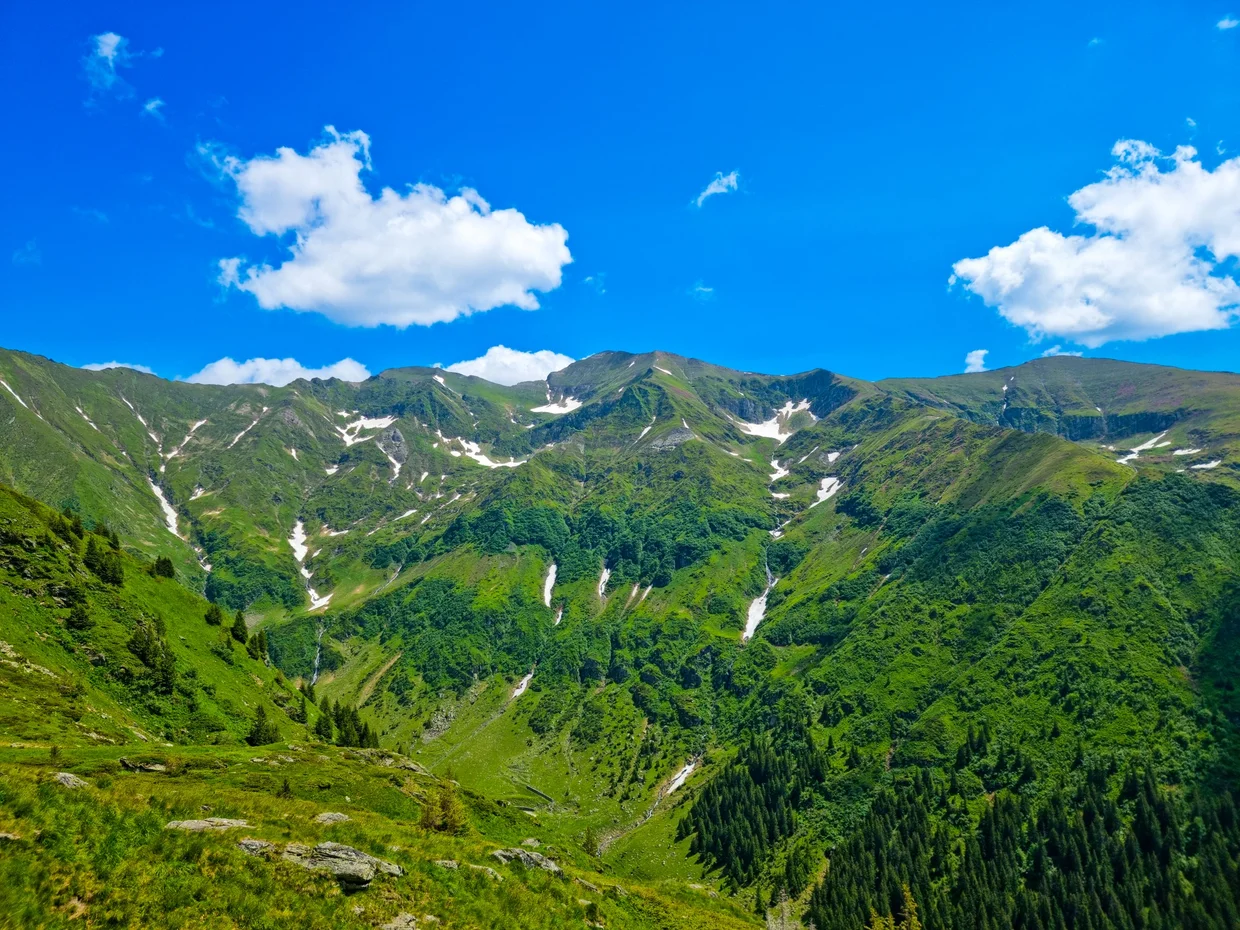
The Transfăgărășan carries a big reputation as a driving road, ever since Top Gear crowned it "the best road in the world." It's a high mountain road Ceaușescu had blasted across the Făgăraș range in the 1970s, climbing to around 2,000 meters through a tangle of hairpins, tunnels, and viewpoints. It's a nice road with nice views, and I'm glad I drove it. I'd just stop short of calling it spectacular.
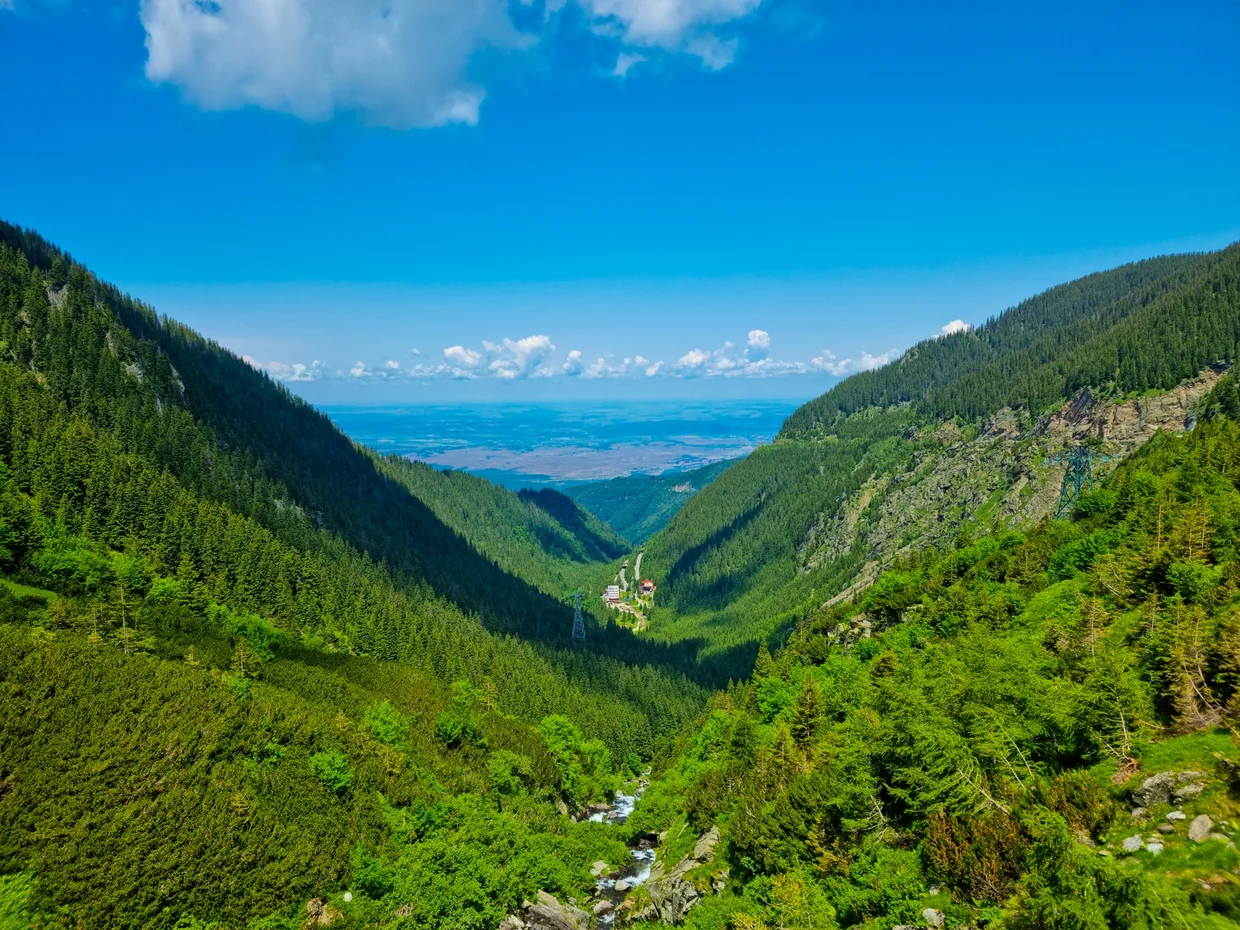
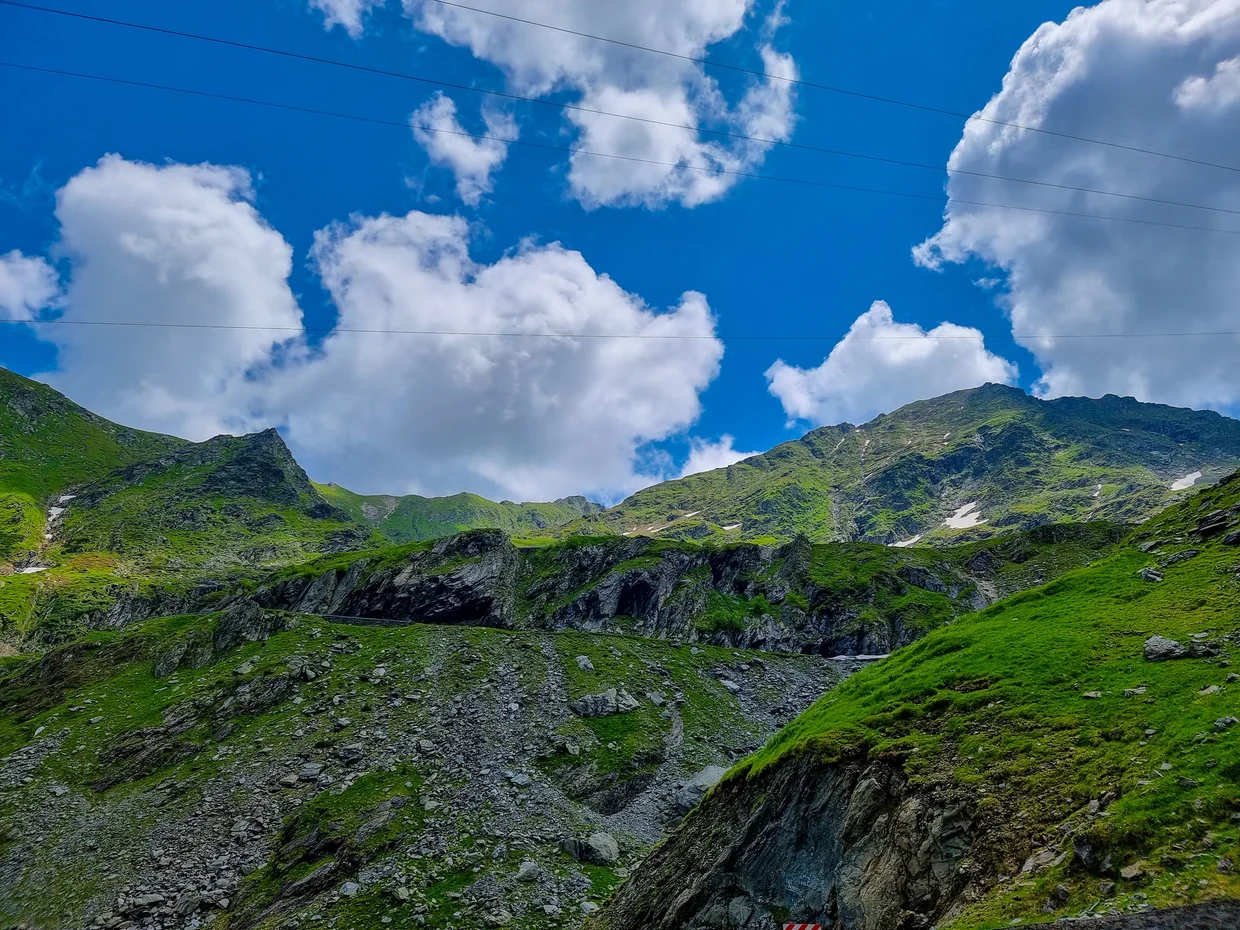
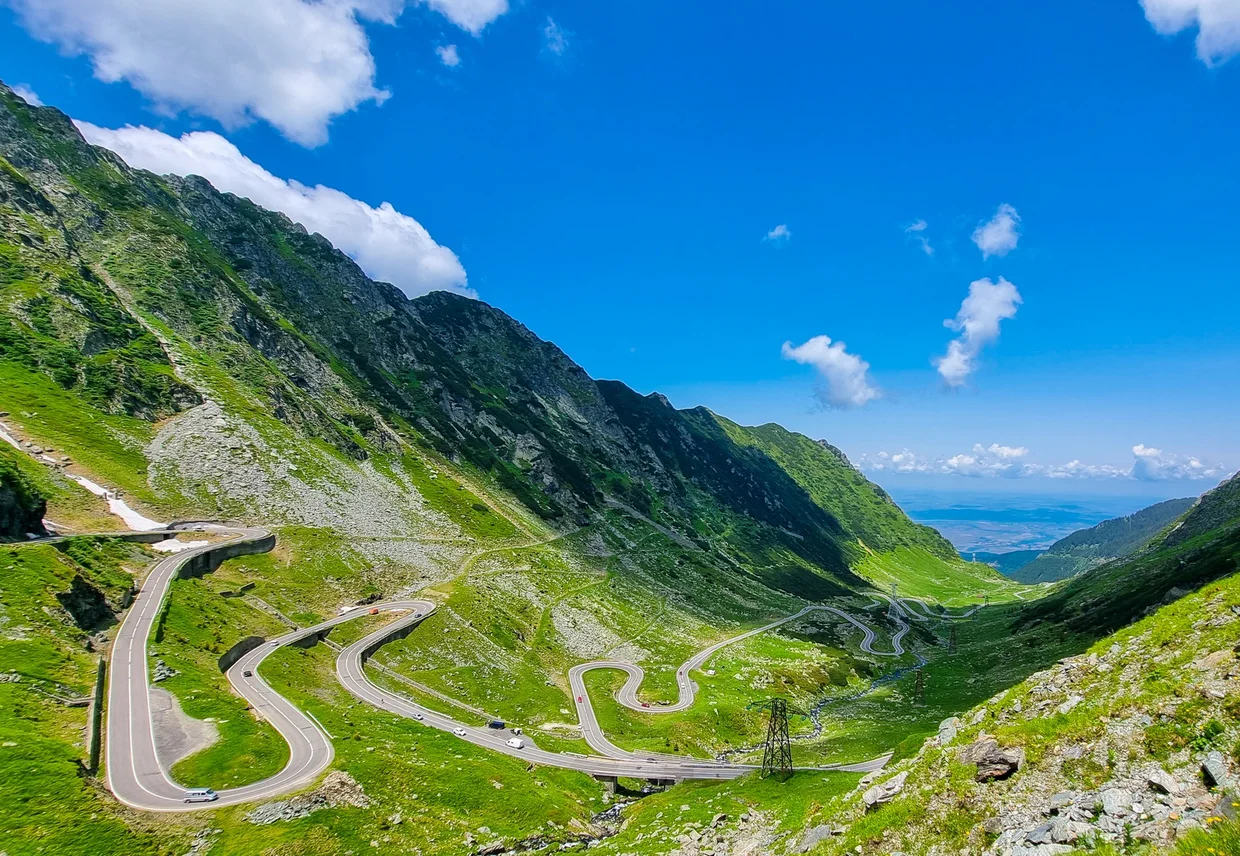
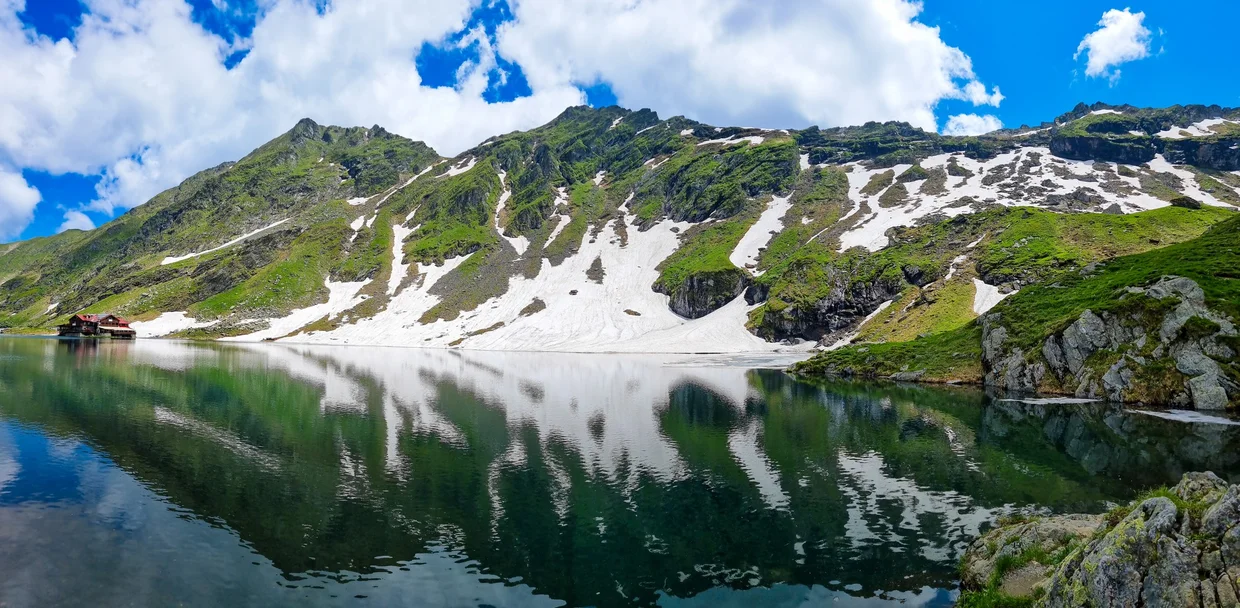
On the way up you get green valleys opening below, waterfalls (probably just the melting snow) coming straight off the rock, and Bâlea Lake near the top, still ringed with snow patches in late June, with the light and weather shifting as you climb. It's lovely, but keep the hype in perspective. There are prettier and more challenging mountain roads out there, and this one is more famous than it is dramatic.
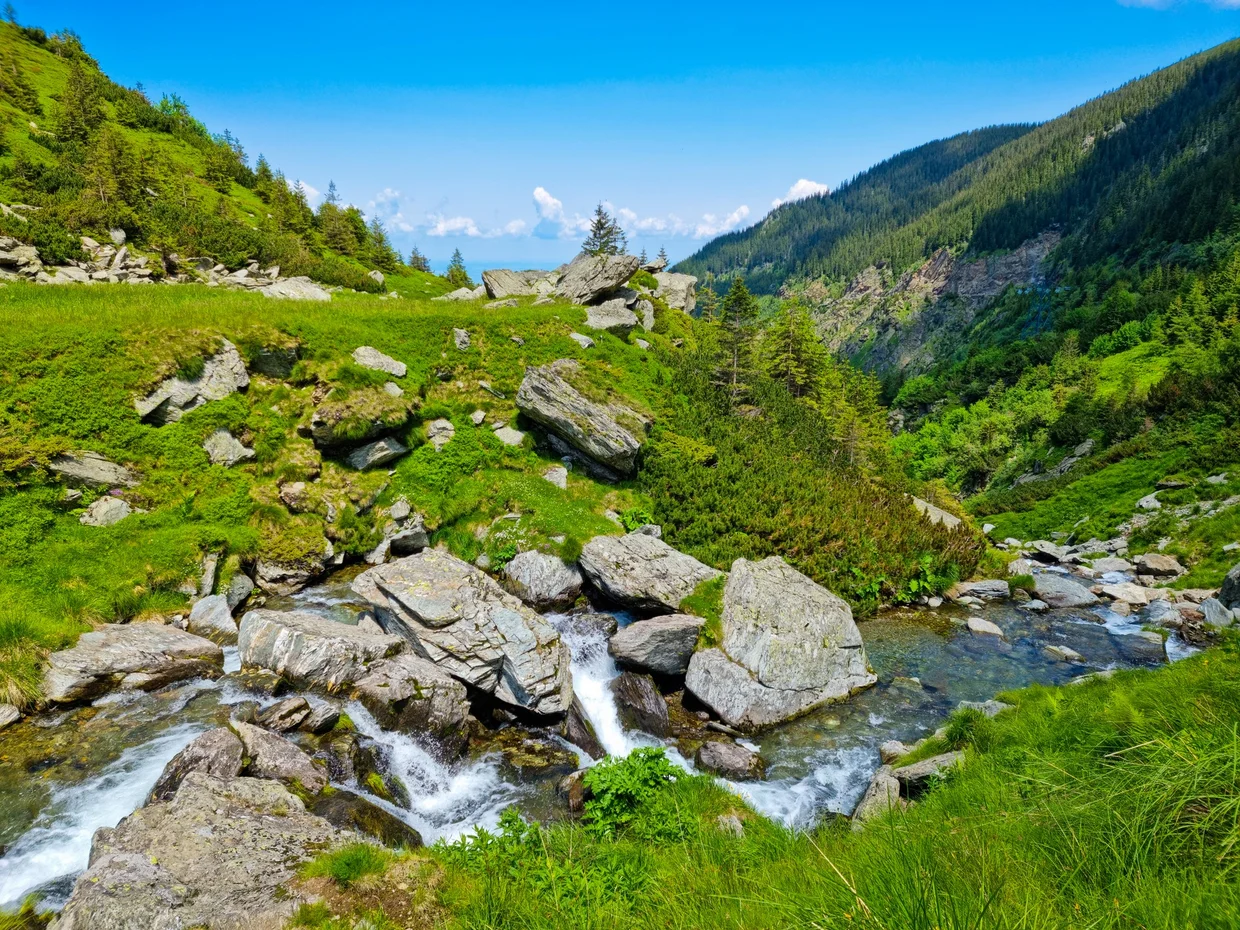
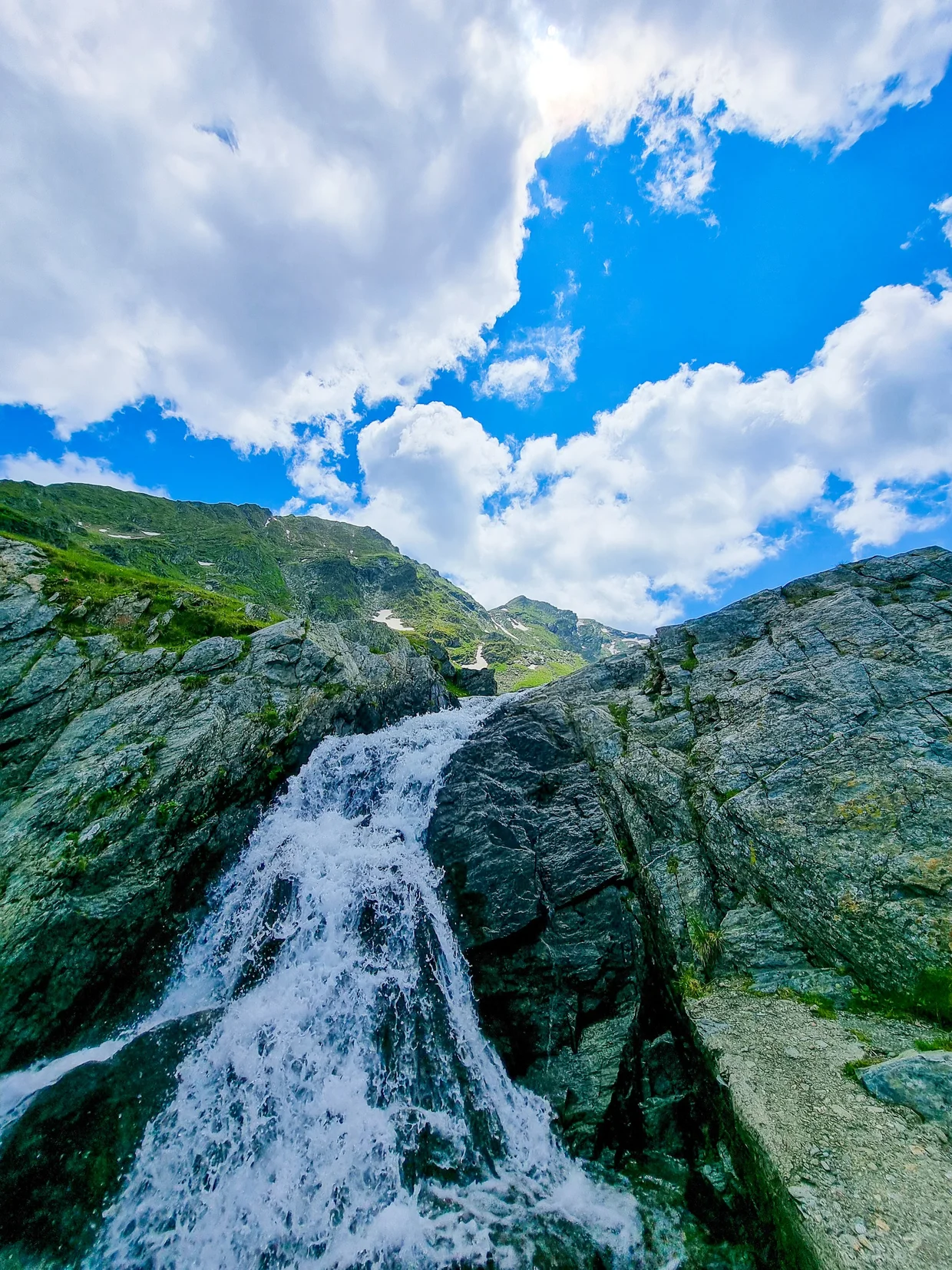
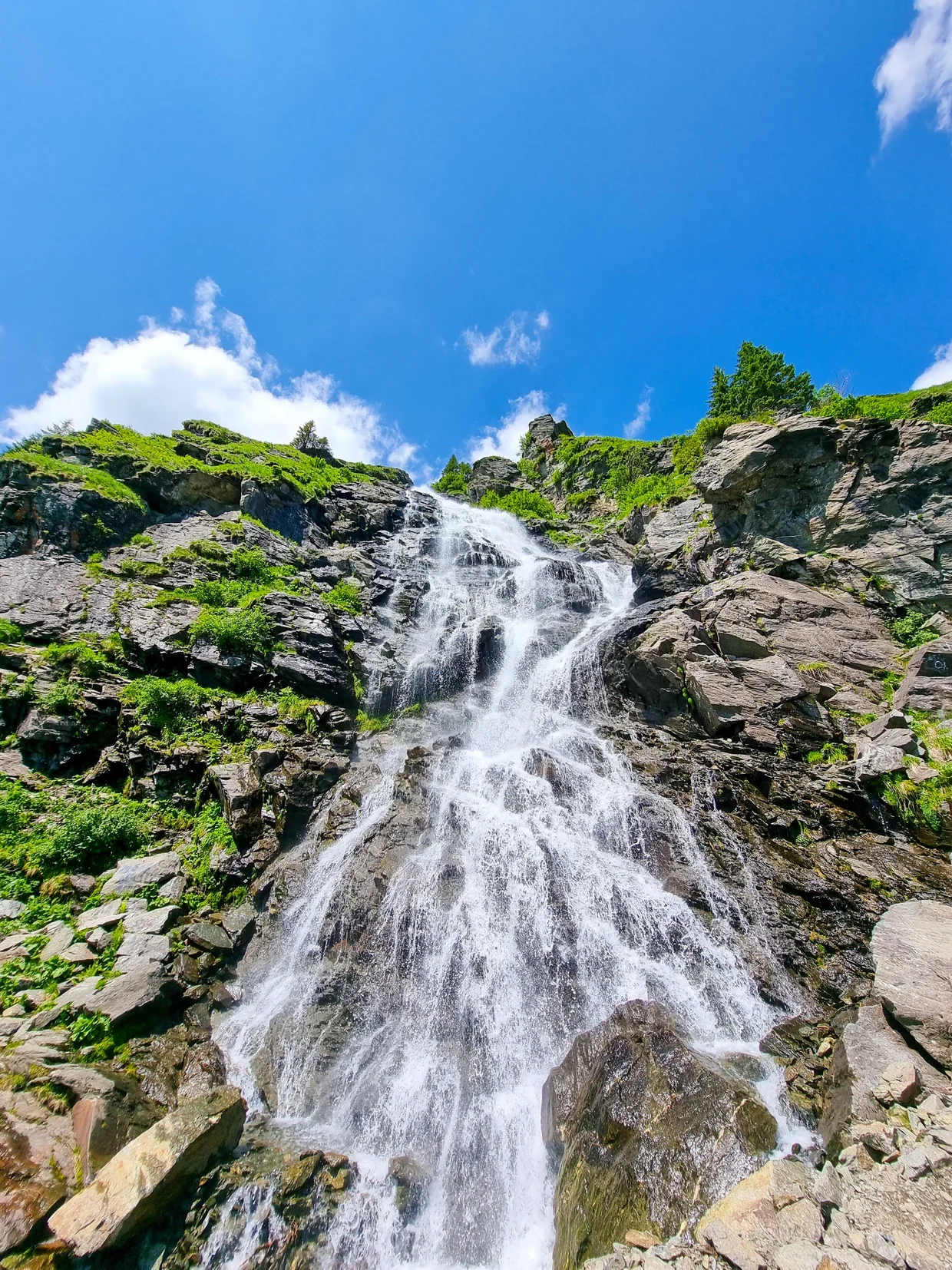
It's casual driving. Sure, narrow in places, the drops are real, and everyone is braking for the same viewpoint you want. Give it your full attention and don't try to pair it with much else in the day. And go early. Get stuck behind a camper van grinding up the hairpins and you'll lose the flow of the drive, a good chunk of your patience, and the view ahead, which is the whole reason you came. If you love driving as much as I do, that's its own special kind of torture.
Bâlea is the obvious high point, but treat the whole road as a full mountain day rather than one quick photo stop. Leave slack for weather, slow traffic, and the constant urge to pull over every time another valley opens up. And check the high section is actually open before you set off, because it's only clear of snow for part of the year and closed to traffic for the rest.
Even with the reputation dialed back, I'd still tell you to drive it. Go for the views, for the bears you'll meet on the way down, and, yes, for the FOMO prevention. Just don't build the whole trip around it.
Roadside Bears and Vidraru Dam
Coming down the southern side, the trip took a turn I wasn't quite ready for: bears, right by the road. Romania's Carpathians hold the largest brown bear population in Europe outside Russia, and along these forest roads some of them have learned that slowing cars mean food. I shot these pics from inside the car and kept rolling.
It's a thrill for about two seconds and then it just feels grim. These are wild animals that people have taught to beg by handing snacks out of car windows.
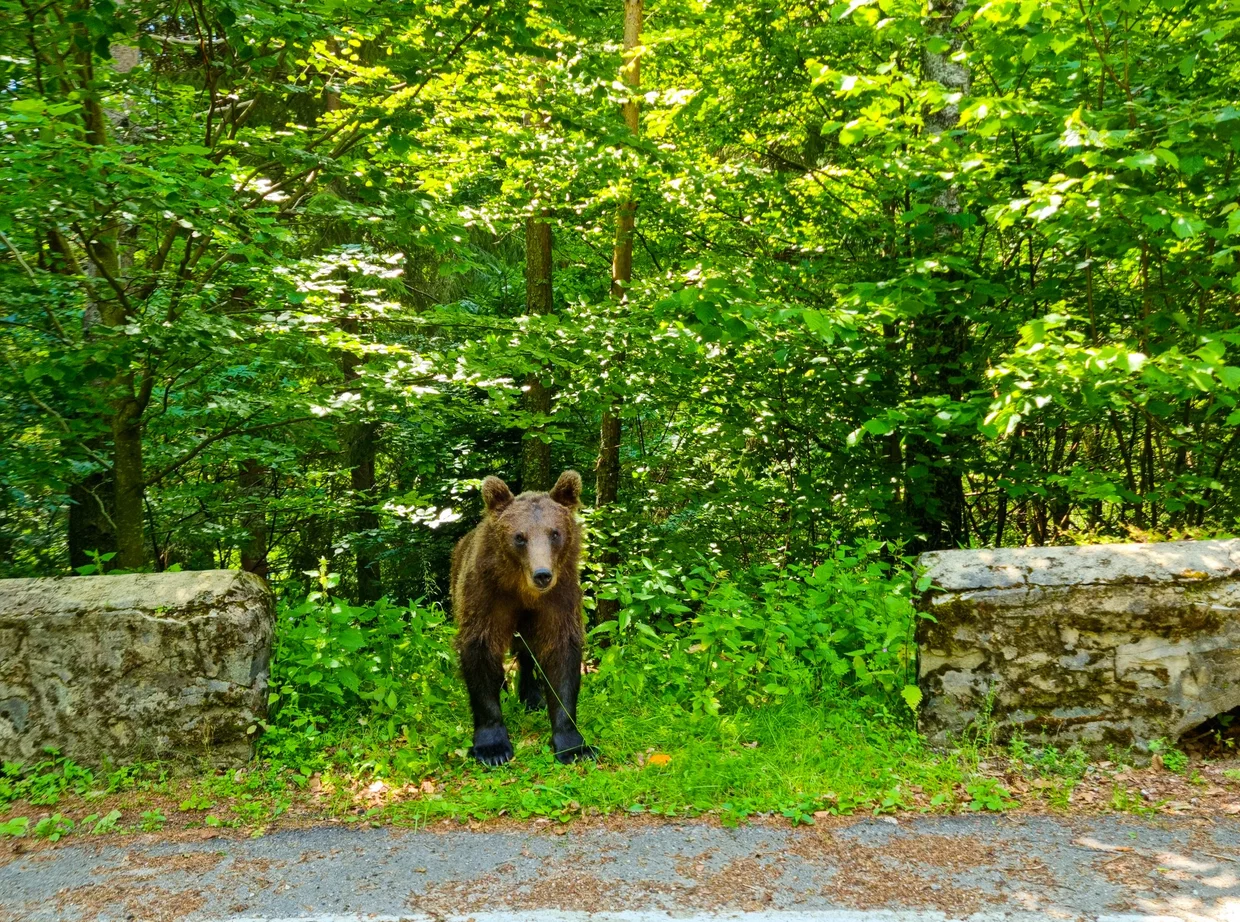
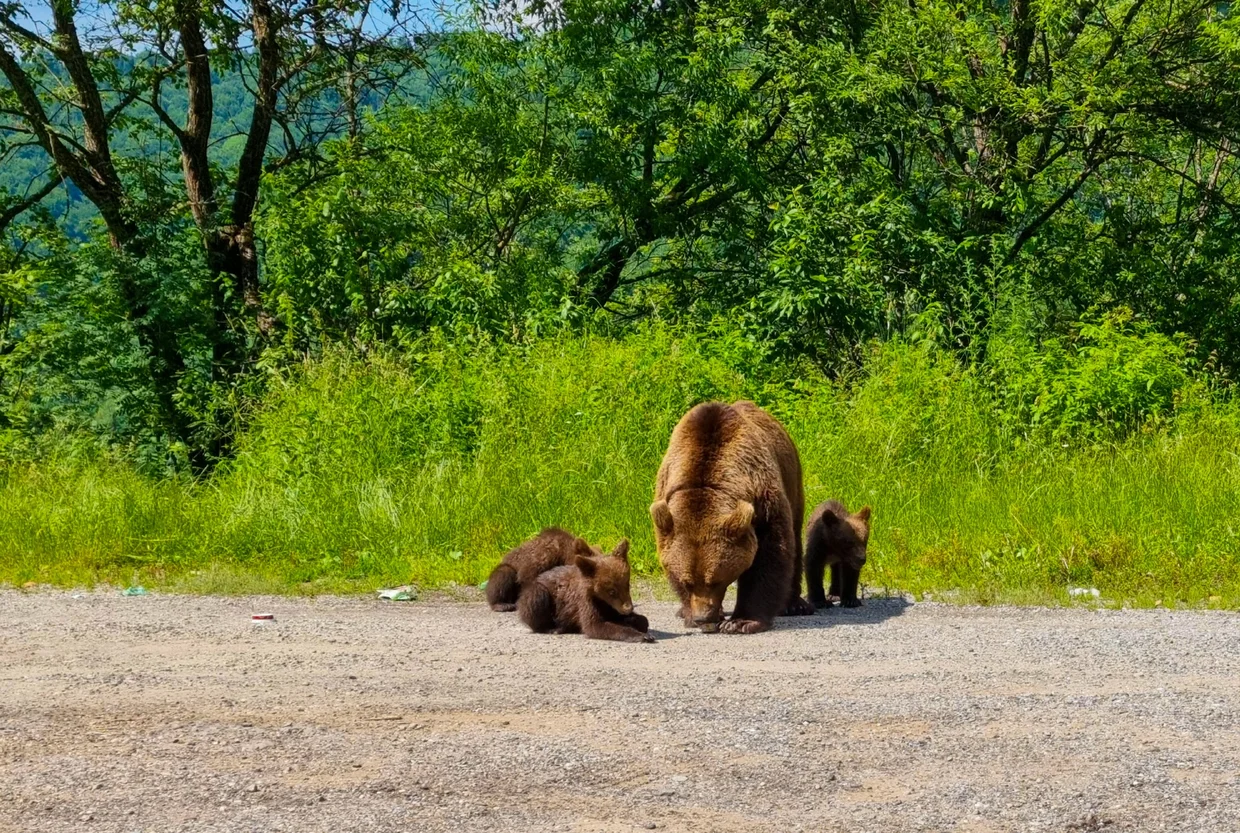
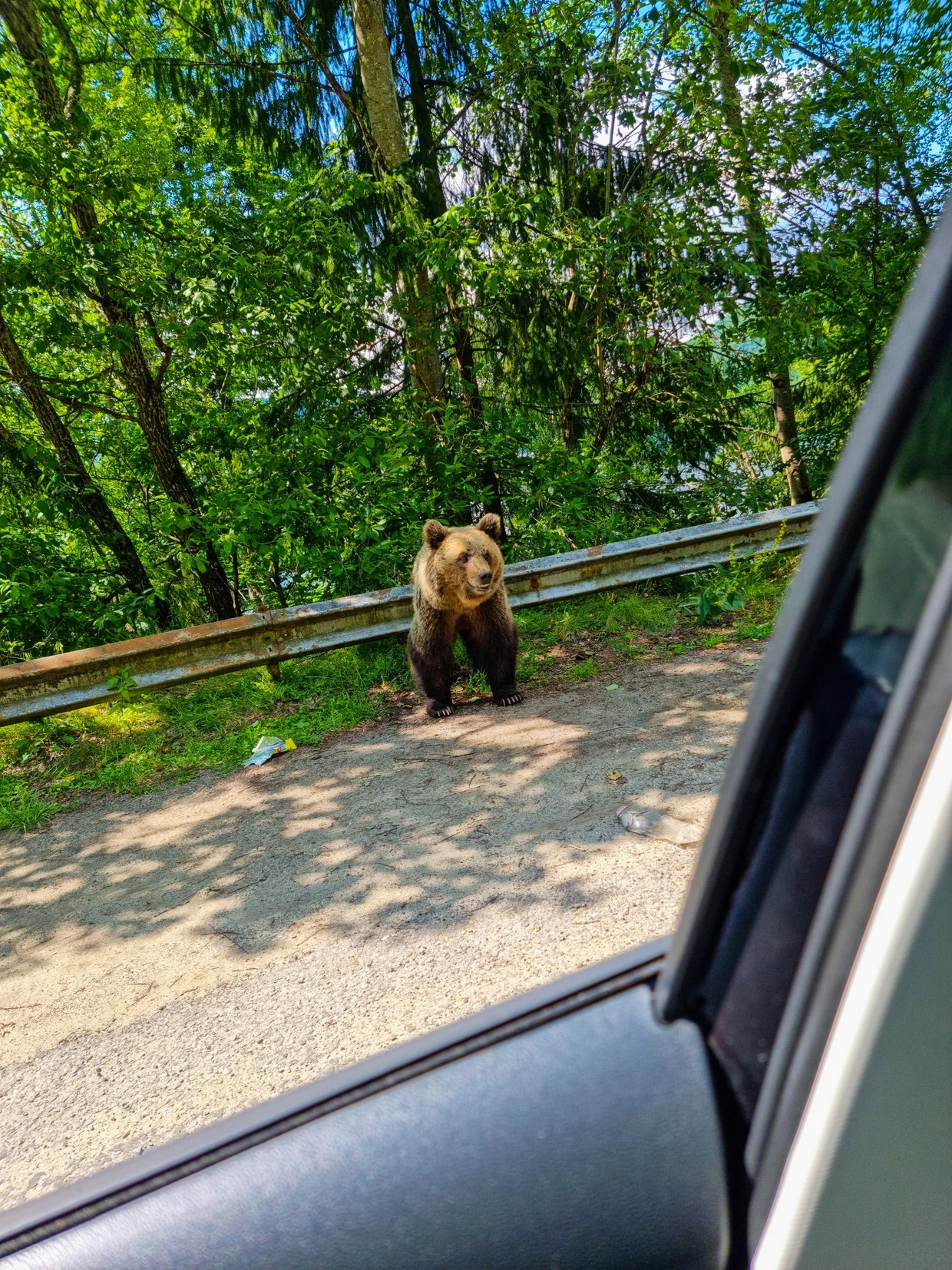
So the rule is simple, and it matters: stay in the car, keep moving, don't stop for photos, and never feed them. Feeding roadside bears isn't a cute travel moment. It's how they turn aggressive, and aggressive bears get put down. Stopping also pulls the next car over, and a quick sighting becomes a dangerous traffic jam fast.
I watched people on motorbikes pull over right next to a bear for a photo, no metal between them and a wild animal that can outrun and overpower them without trying. I genuinely don't understand how anyone can be that stupid and decide that's a good idea. A car is one thing. On a bike you're just a snack.
From there the road drops to Vidraru Dam and its lake. It's a big concrete wall thrown across a steep valley, with blue water backed up behind it and long views down the gorge. After the bears, it's a calm and welcome change of pace.
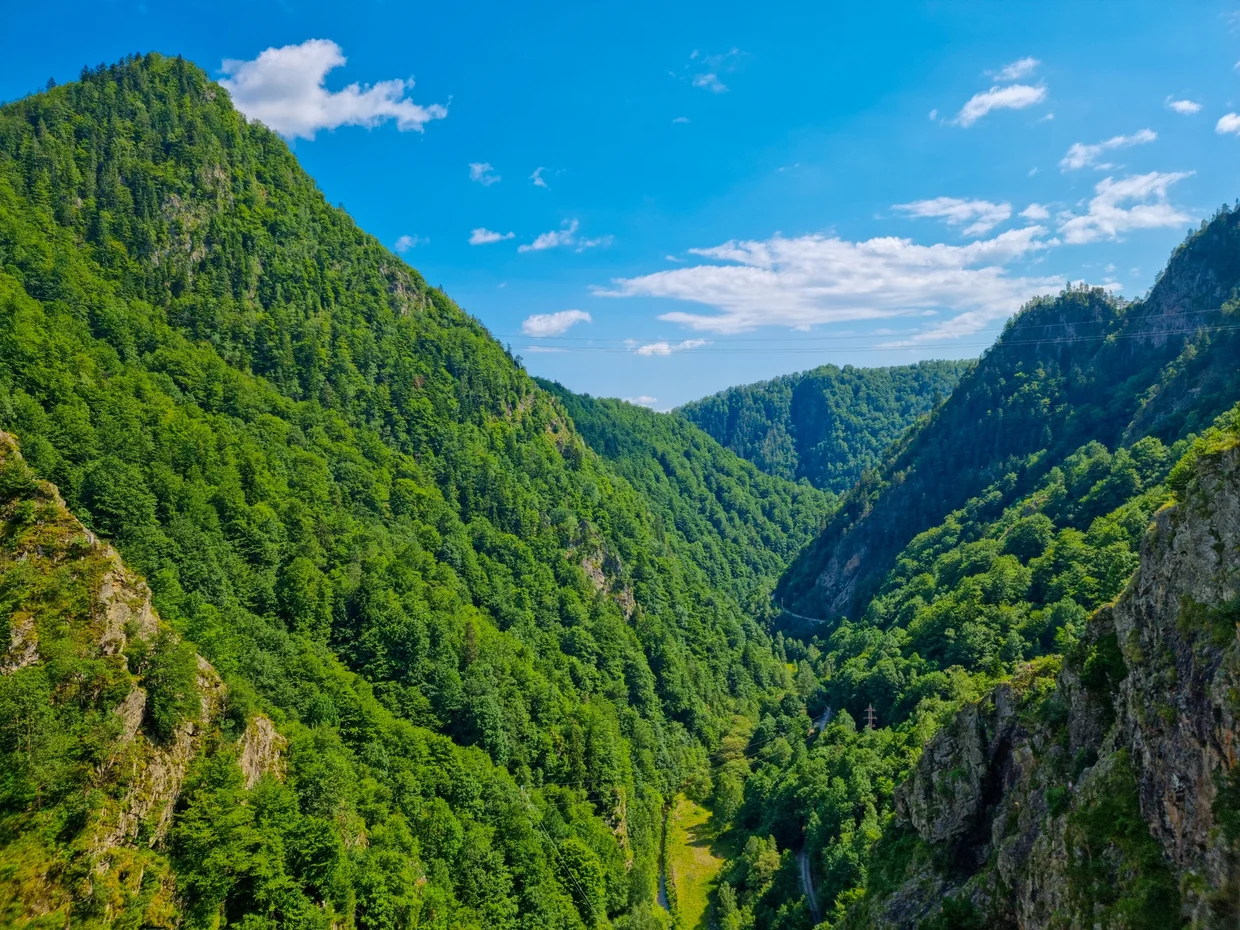
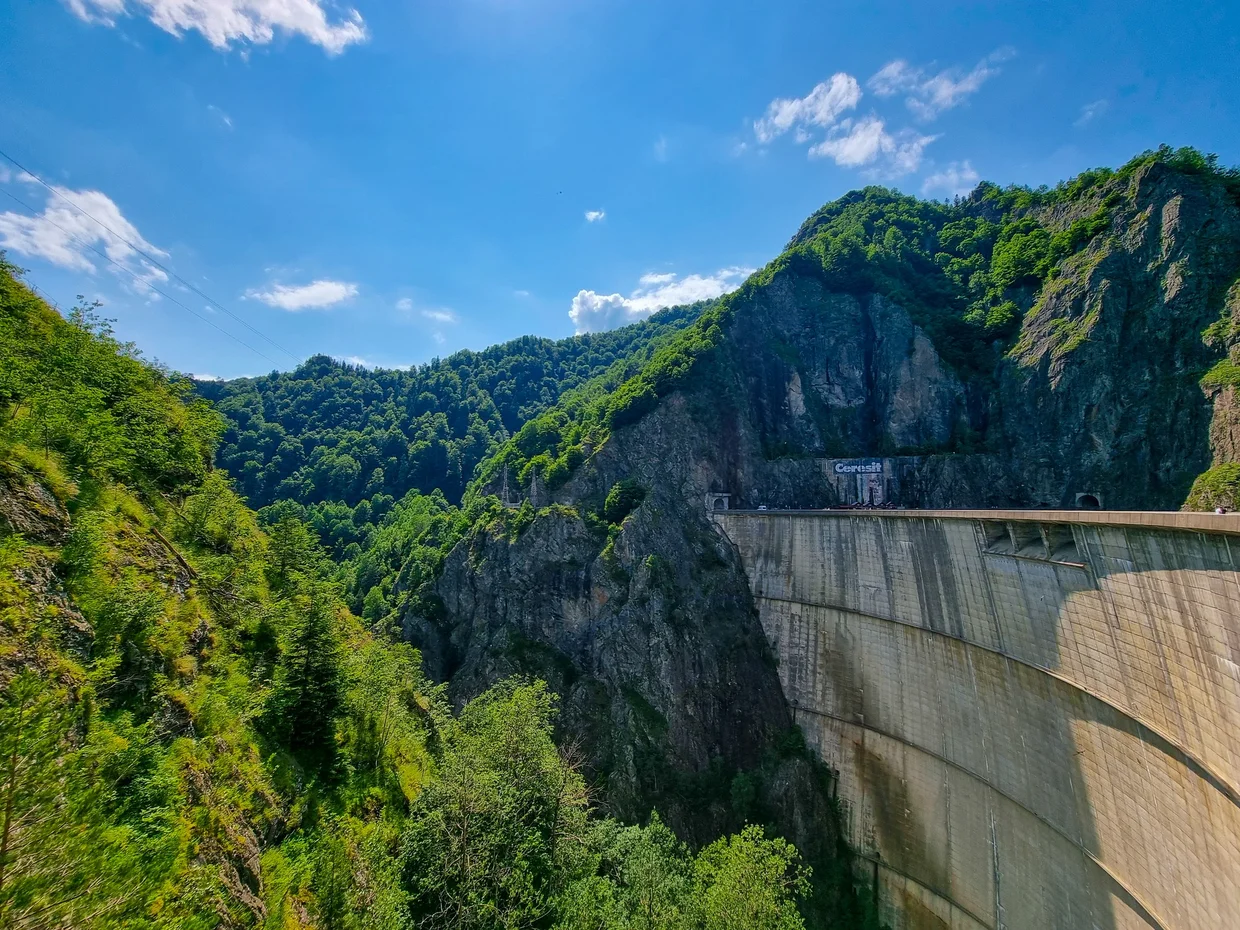
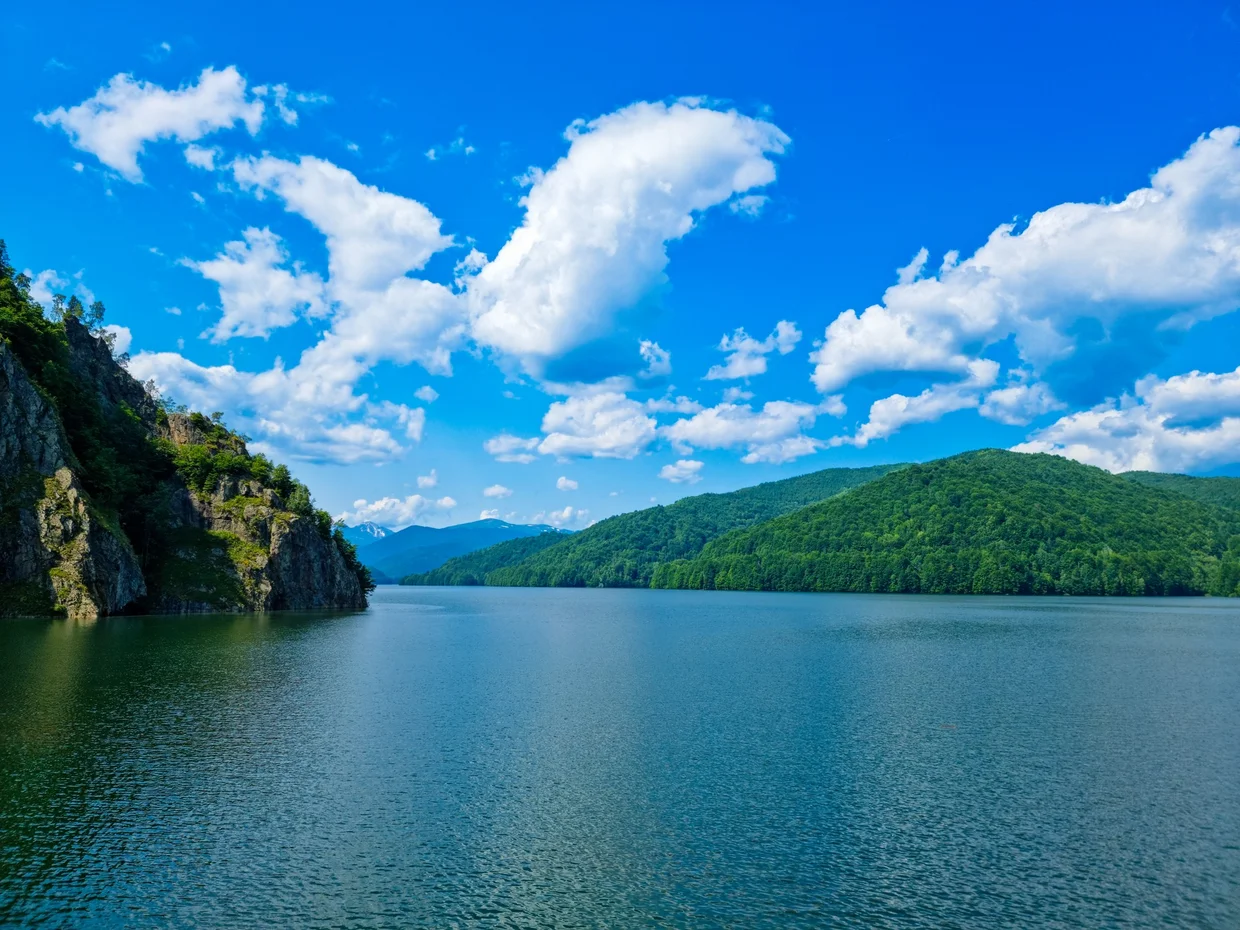
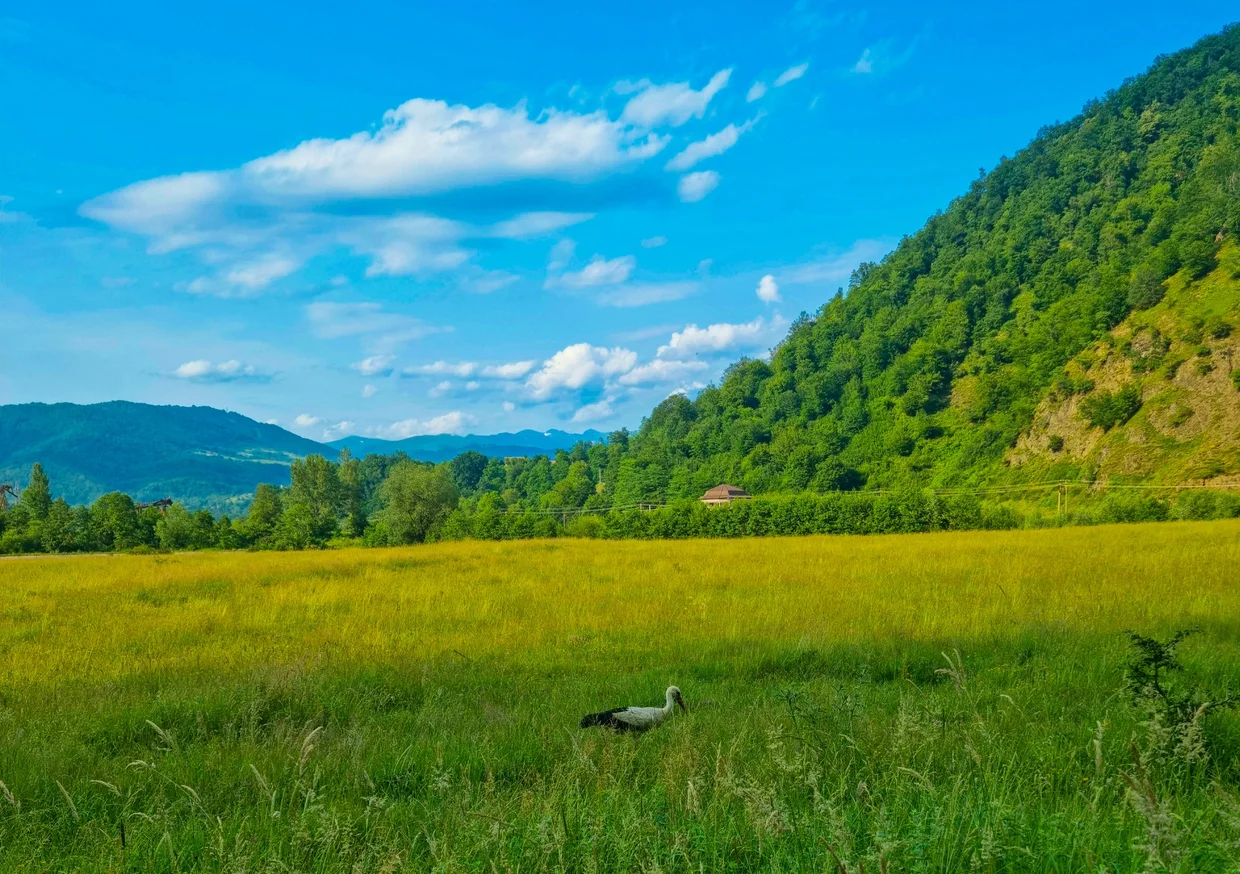
West of the dam the drive softens into open countryside: green meadows, wooded hills, and the odd stork standing around in a field. It's a quiet, rural stretch that makes a good buffer before the long push west to Timișoara.
Timișoara: The Color Reset
Timișoara was the perfect place to finish. After the mountains and the dam, the city brought pastel facades, wide squares, flower beds, and a sky so deeply blue, with such crisp white clouds, that it looked ready to openly challenge Bavarian Skies. There's real history under the prettiness: this is where the 1989 revolution that toppled Ceaușescu began, and the city was a European Capital of Culture in 2023, so much of the center has been freshly done up.
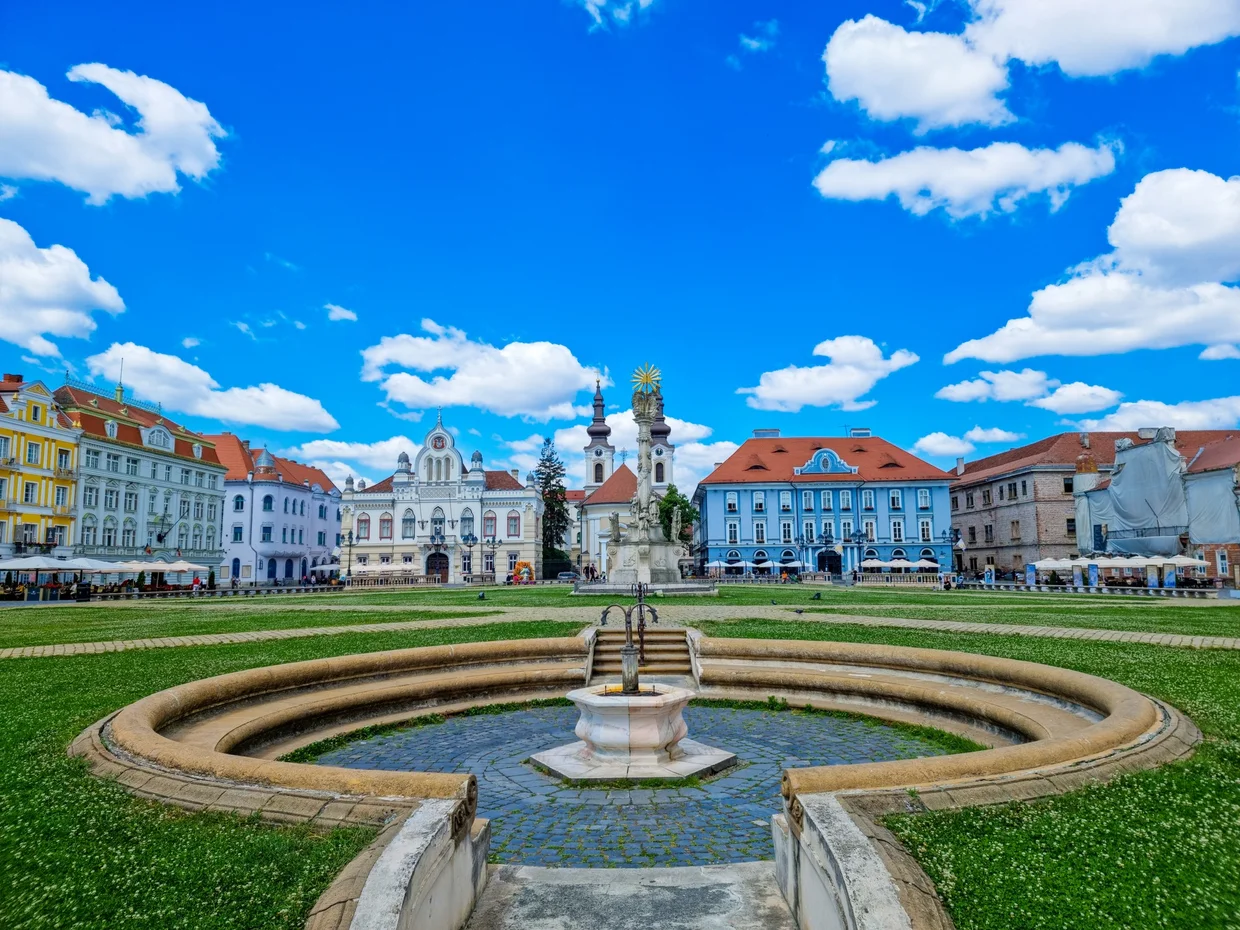
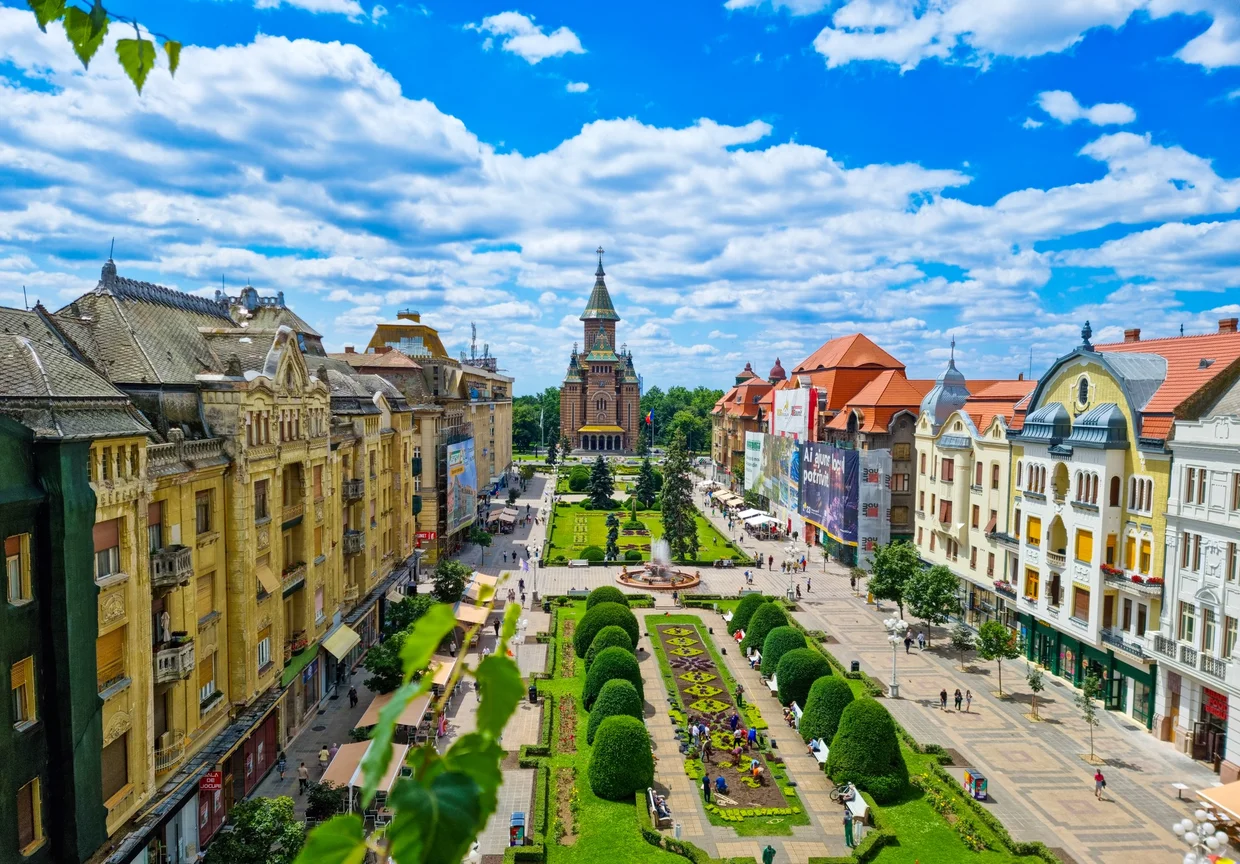
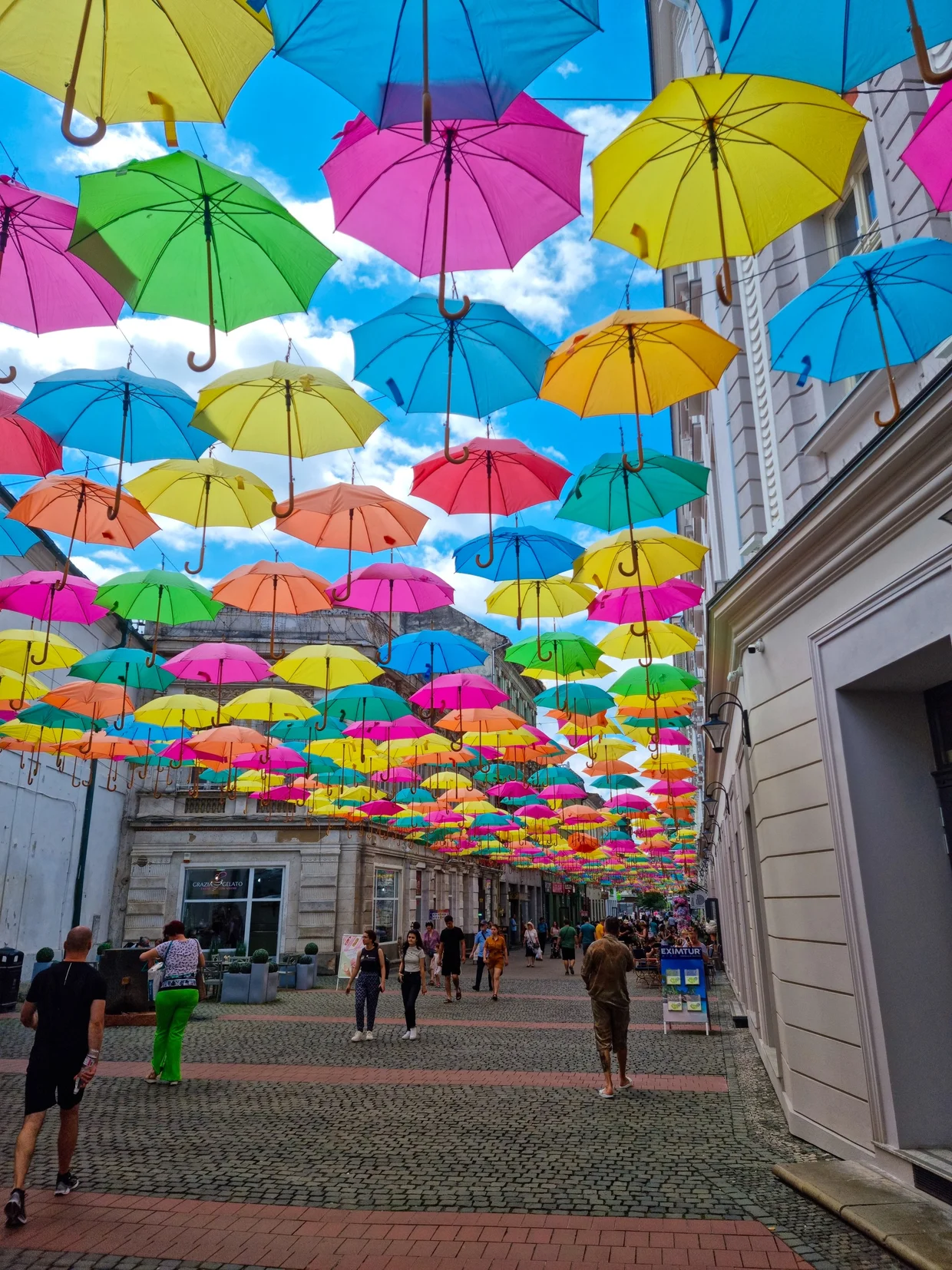
The middle of town is easy on the eyes: restored facades, big pedestrian squares, trams rattling past, and cafe tables everywhere. The umbrella street, a lane roofed with rows of colorful umbrellas, is shameless photo bait, and yes, I took the bait.
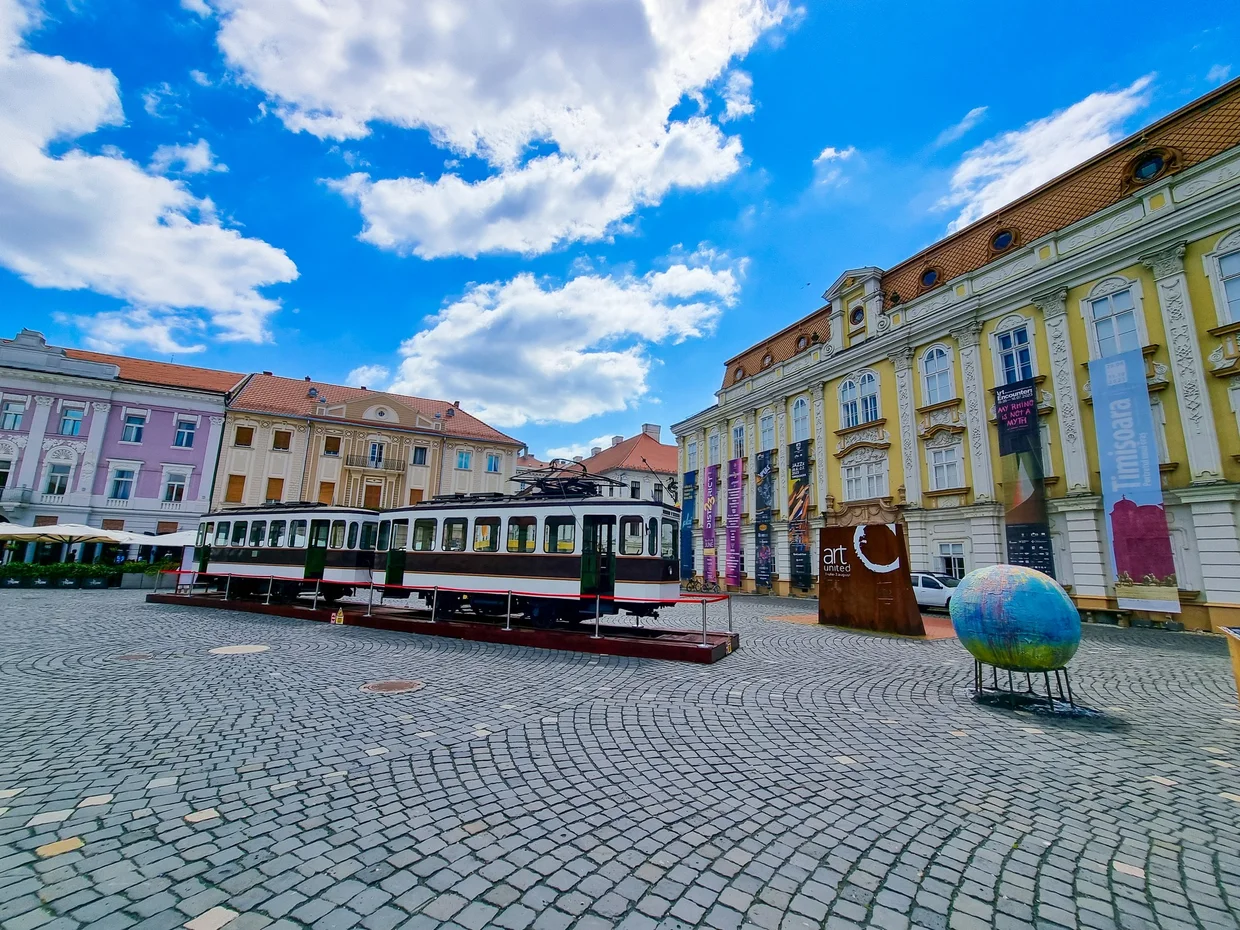
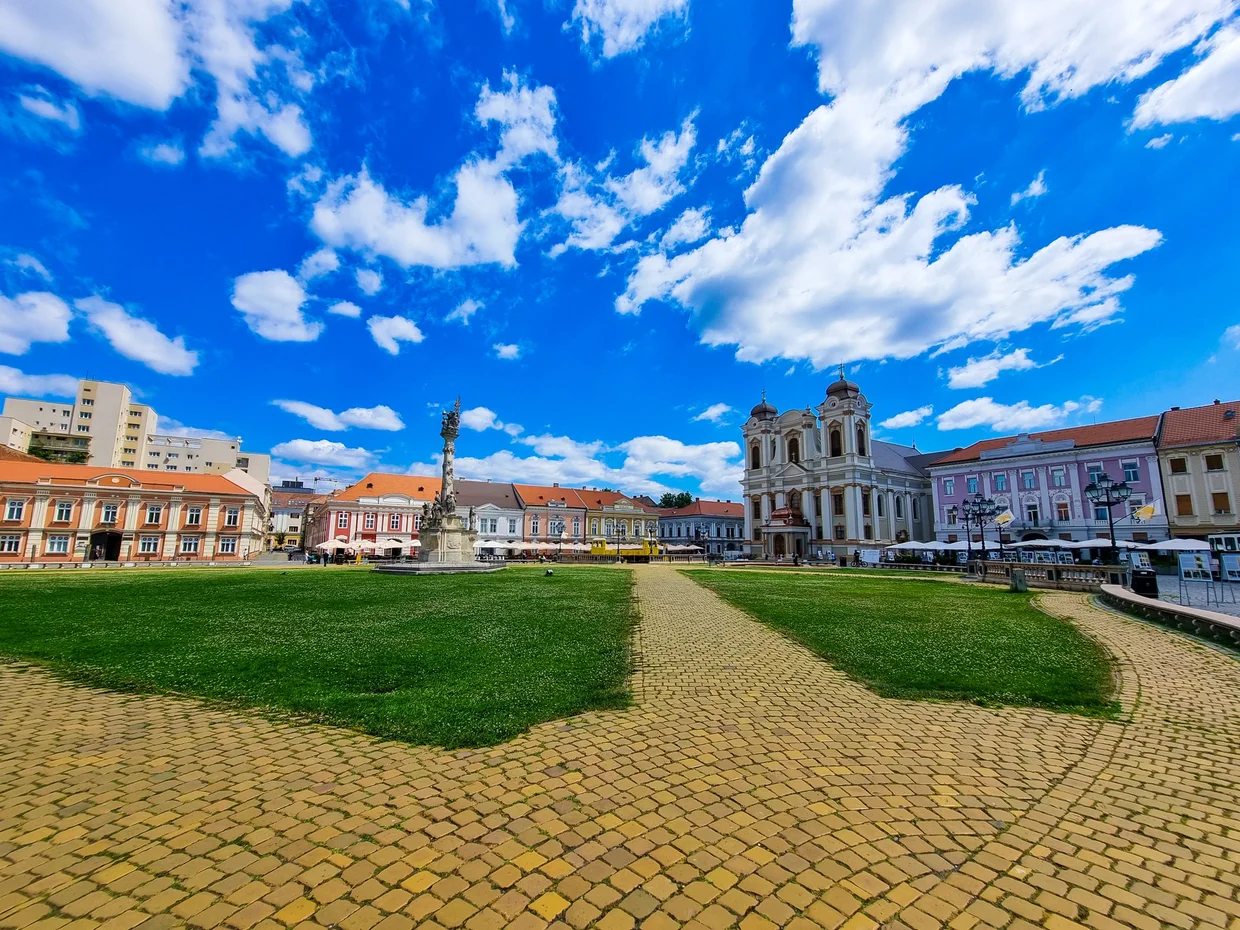
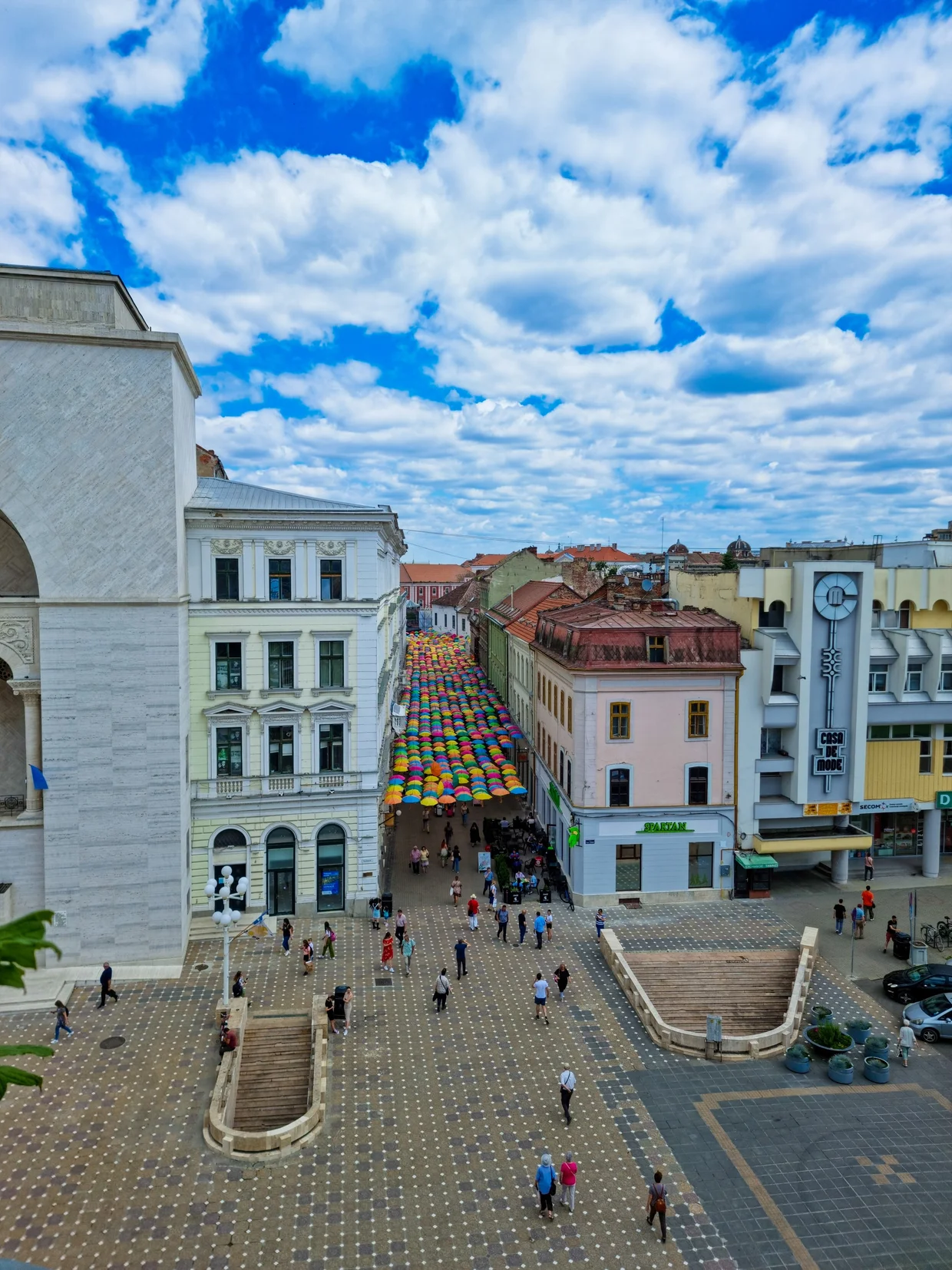
Union Square is the obvious one, baroque facades wrapped around a fountain. Victory Square stretches off toward the Metropolitan Cathedral, and Roses Park softens everything with flower beds, white benches, and a leafy open-air stage. None of it needs a checklist. It's a place that rewards just wandering.
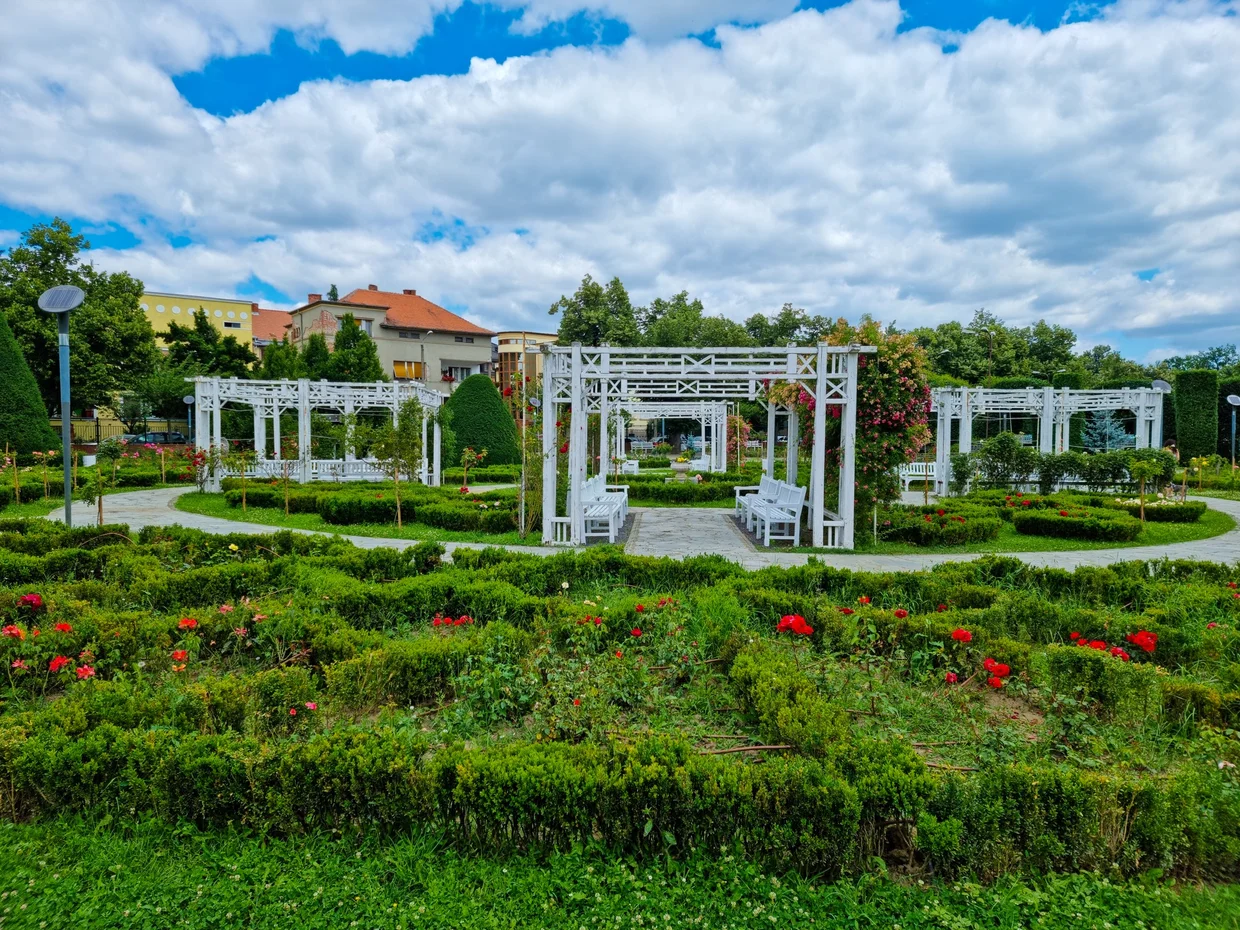
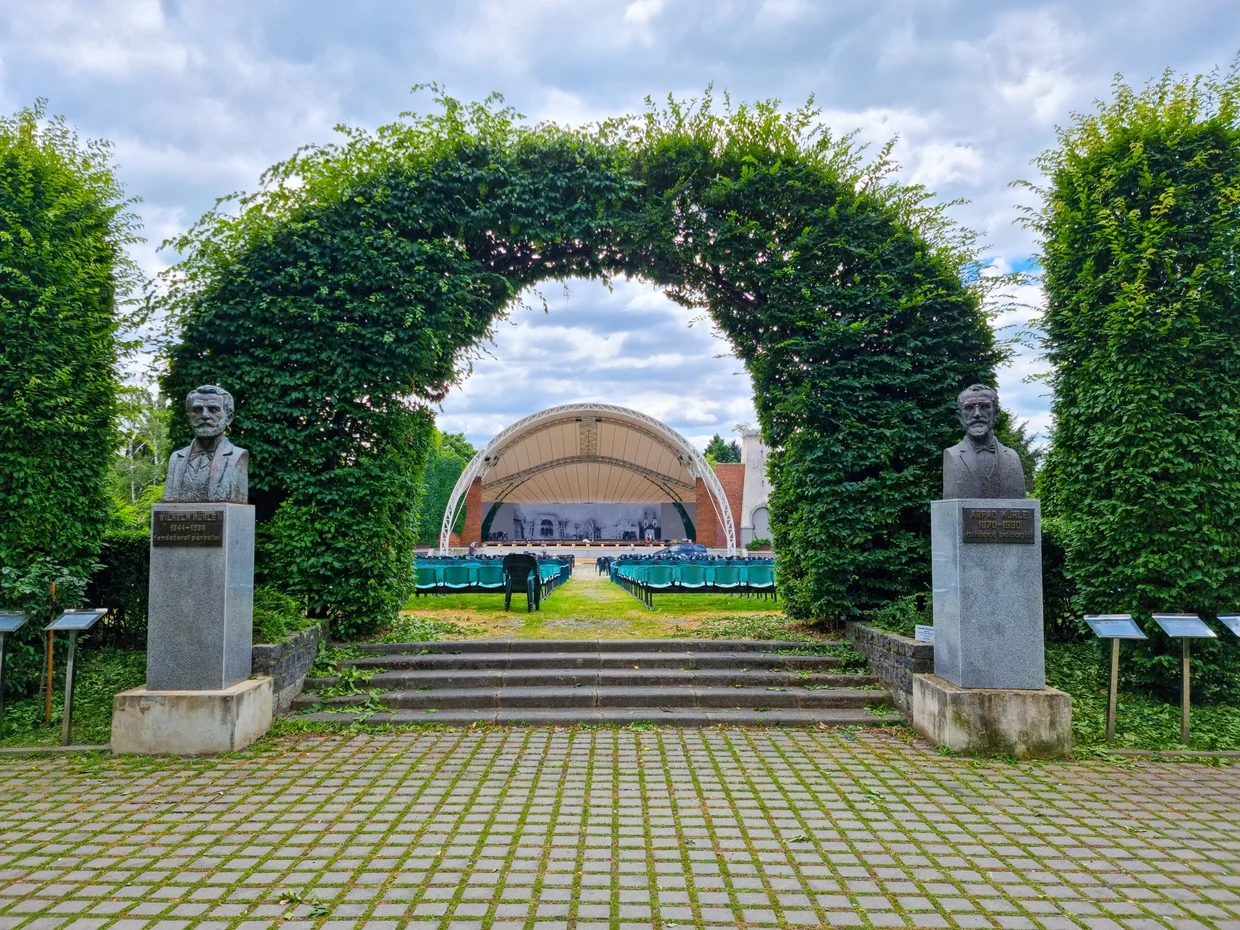
Of everywhere on this trip, Timișoara is the one I'd most like to go back to. I gave it three nights and still left wanting more. There's enough color and calm here to keep you happily wandering for days. Anyway, I'd go again without thinking twice.
When to Go
I went in late June, and it worked out well: bright cities, green mountain valleys, and Bâlea Lake still holding snow patches above the water. Romania has four proper seasons though, and the country splits between hot lowland cities and a high mountain spine, so the best time depends a lot on what you want out of the trip.
May to September is the sweet spot. The cities are warm, the old towns are at their best, and the mountains are green and open. The big practical detail is the Transfăgărășan: its high section is usually only open from roughly late June or early July through October, depending on snow. If the mountain road is the reason you're coming, aim for that window and check the status before you leave.
July and August bring the most heat and the most people. Bucharest can get genuinely hot with no relief, and Bran plus the popular old towns fill up. Plan your city walking for mornings and evenings rather than the middle of the day.
Late spring and early autumn (May, June, September) hit the nicest balance: comfortable city temperatures, green valleys, and thinner crowds. June gave me the color, and September keeps the warmth while quietening things down.
November to March is cold and often snowy inland, the Transfăgărășan high pass is closed, and smaller attractions go quiet. It's also ski season around Poiana Brașov and Sinaia, prices drop, and the cities are yours, so it's a fair trade if snow is what you're after.
Sarmale, Mici, and Țuică
Romanian food is hearty and built around what the season gives you, leaning on the usual Balkan and Central European mix of meat, cabbage, cheese, and bread. It is filling, cheap, and easy to find.
The national dish is sarmale, cabbage rolls stuffed with minced meat and rice, usually served with polenta (mămăligă) and a spoon of sour cream.
Mici (also called mititei) are skinless grilled rolls of seasoned minced meat, basically a close cousin of the ćevapčići you find across the Balkans, and they show up at every casual grill and beer garden. I'm not a big meat eater, and even I thought they were really, really good.
The one sweet thing you can't skip is Kürtőskalács (also called colac secuiesc), the Transylvanian "chimney cake," a hollow spiral of sweet dough grilled over coals and rolled in caramelized sugar. The name is actually Hungarian, which makes sense once you know that parts of Romania, Transylvania especially, are home to a substantial Hungarian minority. That's also why you'll catch Hungarian words on signs and menus here and there as you travel through the region. It's a snack rather than a meal, good at any hour, and you'll spot the stands here and there, often street vendors and food trucks out beyond the big cities. Try it at least once, though I doubt you'll stop at one.
On the drinks side, țuică and pălincă are the strong plum brandies you will get offered before, during, and after a meal, often homemade and proudly poured. Treat the homemade stuff with respect, since poorly distilled spirit can be risky.
If traditional meat-heavy dishes are not your thing, the cities have plenty of normal cafe and pizza options, and a Shopska-style tomato and cheese salad turns up everywhere as a light side.
Travel Tips for Romania (Before You Go)
Plan the essentials before your trip to Romania, including plug types, SIM or eSIM options, and travel insurance coverage.
Plug Check
Do you need a plug adapter?
Compare your home sockets with Romania before you go.
230V and Type C/F sockets
ESIM
Land with data already working
Set up mobile data before arrival so maps, rides, and messages work the moment you land.
eSIM or physical SIM?
Romania is in the EU. If you already have an EU SIM or eSIM with roaming, you're set. For a trip under two weeks, an eSIM is the easy option. For longer stays, a local SIM from the airport works out cheaper.
Read the SIM vs eSIM guideTravel Insurance
Sort coverage before you need it
Medical costs and trip disruption are easier to handle when you're covered
Getting Around
Outside Bucharest, the car does the heavy lifting. Bran, Sighișoara, Sibiu, the Transfăgărășan, Vidraru, and Timișoara don't link up neatly unless you're driving, so a rental car is the obvious choice. It's really the only realistic way to do the mountain road and the bear-and-dam stretch at your own pace.
One hard-earned warning, because it happened to me right here: I landed late, and at the rental desk their machine declined both my Visa and Mastercard, and they didn't take Amex at all. The only way out was my debit card plus their full insurance package, around 150 RON a day on top, with no other office open and no Plan B. It turned a budget trip into the most expensive rental I've ever booked. Carry at least two credit cards in the main driver's name and check the company's accepted-card policy before you fly.
Trains and intercity buses do connect the bigger places (Bucharest, Brașov, Sibiu, Timișoara), and they're cheap, but they're slow and they leave the best bits stranded. The Transfăgărășan in particular isn't something public transport handles at all.
Bucharest itself has a metro plus trams and buses, which is plenty for the capital. In the towns, parking and patience become part of the game, and rural roads can be rough and narrow, so leave more time than the map suggests.
Within the cities, Uber is the easy win. It's dirt cheap and everywhere in Bucharest, Sibiu, and Timișoara, usually cheaper and less hassle than figuring out tickets. The cars are a lottery: some I rode in wouldn't have passed a German TÜV inspection, others were brand-new EVs. Either way the app sorts out the price and the route, so you skip the classic taxi haggling.
It all gets easier if you think in chunks. Bran and Sighișoara can share a day, Sibiu makes a good base before the mountains, and the Transfăgărășan and Vidraru want a day to themselves. The one bit of advice that matters most: don't overpack the day the road climbs into the mountains. The stops look close together on a map, then the curves arrive and time starts behaving strangely.
What Romania Costs
Romania is one of the cheaper countries in the EU. Eating out, fuel, and accommodation all come in well below Western European prices, and even a comfortable trip stays easy on the wallet. The currency is the Romanian Leu (RON), and most everyday things are priced in small, friendly numbers.
The prices shown here are meant as a rough guide and can vary over time. While I update exchange rates regularly, local prices are typically refreshed only when I revisit the destination.
The biggest variable is summer demand around Bran and Brașov, where rooms get pricier and book out. Anywhere off the main castle trail stays cheap, and the mountain scenery that carries this whole route costs nothing at all.
Is Romania Safe?
Romania is a safe country for travelers. Violent crime against visitors is rare, the cities feel calm day and night, and the usual tourist routes are relaxed. The things actually worth thinking about here are practical: petty theft in crowds, rough rural roads, mountain driving, and the very specific issue of roadside bears.
Solo Travel and Crime
Solo travel is straightforward. The cafe-and-old-town culture in Bucharest, Sibiu, Brașov, and Timișoara is easy to move around in alone, and you will see plenty of other solo travelers doing the same.
Petty theft is the main thing to watch. Pickpockets work busy spots: Bucharest's transport, packed squares, and the tighter tourist lanes. Keep your phone and wallet in a front pocket or a zipped bag and you'll almost certainly be fine.
Taxi and ATM scams are the classic tourist traps, mostly in Bucharest. Use a ride app like Uber or Bolt instead of flagging a random cab, and stick to ATMs attached to actual bank branches.
Driving and Bears
Driving is where the real risk lives. Rural roads can be potholed and narrow, overtaking on two-lane roads gets aggressive, and the Transfăgărășan demands full attention: tight bends, sheer drops, and everyone braking for the same viewpoint. Spring for the full insurance, drive defensively, and don't rush the mountain day.
Roadside bears aren't a novelty. They gather along the forest roads in the Carpathians, especially around the Transfăgărășan and the Vidraru route, and they're dangerously used to cars. The rule is simple: stay in the car, keep moving, don't stop for photos, and never feed them. Stopping puts you at risk and teaches the bears to treat the road as a buffet, which eventually gets them killed.
Health and Environment
No special vaccines are needed beyond routine ones. Tap water is generally safe in the cities, though plenty of locals prefer bottled. Pharmacies (farmacie) are easy to find and well stocked, and EU citizens can use the EHIC card in the public system. Bring the basics you rely on anyway.
Summer heat in Bucharest is stronger than the chart suggests, with no sea breeze to soften it. Drink water, avoid the midday old-town climb, and take the sun seriously. In the mountains the opposite applies: weather turns fast and cold even in summer, so pack a layer for the high sections of the road.
Published June 2026.